

Two storm shelters can carry the same wind rating on their spec sheets and still offer very different real-world protection. The difference sits in the testing record. What tests were performed, which facility conducted them, what loads the unit survived, and whether an independent third party verified the results all matter. For safety directors evaluating tornado-safe certified shelters, understanding the testing process matters. It's the foundation for a procurement decision that holds up under both regulatory scrutiny and actual storm conditions.
The Standards Behind Tornado-Safe Certified Shelters
FEMA P-361, published by the Federal Emergency Management Agency (FEMA), provides guidance on planning, design, construction, and operation of safe rooms. It sets performance criteria for wind resistance, debris impact, ventilation, and occupant capacity. The ICC/NSSA 500 standard, co-published by the International Code Council (ICC) and the National Storm Shelter Association (NSSA), codifies those criteria into an enforceable consensus standard. It's referenced by the International Building Code (IBC) and the International Residential Code (IRC).
Both documents require shelters to resist wind speeds of 250 mph, the upper bound of the EF-5 tornado classification. They also must survive debris impact from a 15-pound 2×4 timber stud driven at 100 mph against vertical surfaces and 67 mph against horizontal ones. These two requirements, wind load resistance and debris impact survival, form the core of the testing process. Additional requirements cover ventilation, occupant density, egress, and fire resistance. But wind and debris testing is what distinguishes a certified shelter from an ordinary building.
What Debris Impact Testing Looks Like
Debris impact testing fires a calibrated projectile, typically a 15-pound 2×4 timber stud, at the shelter's walls, door, and roof. A pneumatic cannon launches it at specified velocities. The test is conducted at a facility equipped to measure and document impact speed, projectile mass, and the shelter's response. A passing result means the projectile didn't penetrate the shelter envelope, and the impacted surface held its structural integrity through the event.
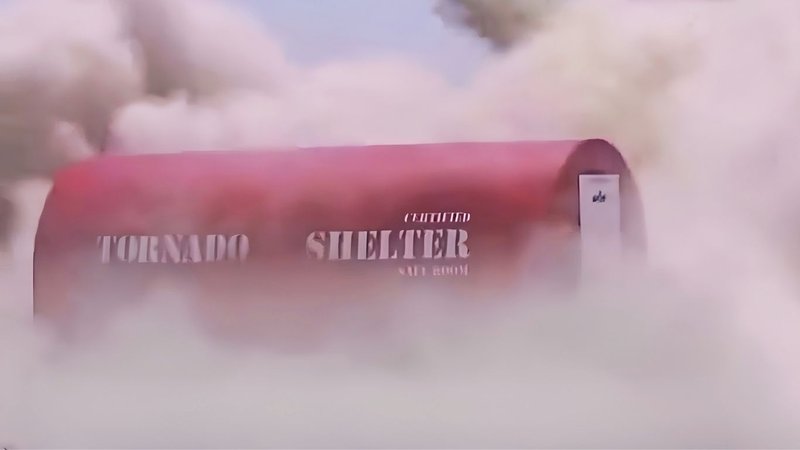
Texas Tech University's Wind Science and Engineering Research Center has conducted debris impact research since the late 1990s. It has tested shelters and components for both FEMA 320 prescriptive designs and manufacturer-specific products. The center's research directly informs FEMA's safe room criteria. Red Dog Shelters' Big Dog units were impact tested at Texas Tech, confirming debris resistance at FEMA's specified thresholds for wall and door assemblies.
Passing a debris impact test confirms the shelter's materials and construction can stop high-velocity projectiles under controlled conditions. It doesn't confirm, on its own, that the full structural system can withstand sustained wind loads, internal pressure changes, and combined tornado forces. This confirmation comes from structural analysis.
Structural Analysis and Third-Party Verification
Wind load resistance is typically verified through engineering analysis rather than full-scale wind tunnel testing. Subjecting a 35-foot steel shelter to 250 mph winds in a lab isn't practical with current test infrastructure. A licensed structural engineer analyzes the shelter's design, materials, connections, and load paths against the wind, uplift, and pressure criteria in FEMA P-361 and ICC 500. The analysis confirms every component, from roof to floor to door frame and hinges, can carry the required loads without failure.
NSSA's verification process requires this analysis to be conducted by a qualified, independent third-party engineering firm. The shelter producer certifies compliance, but NSSA's process adds independent validation that the claim is backed by engineering documentation. Red Dog Shelters' Big Dog units are individually stamped and certified through this third-party process. They meet or exceed FEMA P-320, FEMA P-361, ICC 500, and NSSA requirements. "Individually stamped" means each unit carries its own certification, not a blanket approval based on a single prototype test.
When Testing Goes Beyond the Standard Requirements
Some manufacturers conduct testing beyond FEMA P-361 and ICC 500 minimums to establish a broader performance envelope. Red Dog Shelters commissioned a blast test through the Southwest Research Institute, a nationally recognized independent testing organization. The test detonated 500 pounds of high-powered explosives 78 feet from a Big Dog unit. This produced a 2.77-million-pound impulsive force followed by winds exceeding EF-5 tornado strength. The shelter survived with all structural connections intact.
No current tornado shelter standard requires a blast test of this kind. Its value is in demonstrating performance margins. A unit that survives a blast event of that magnitude has faced combined overpressure and wind forces well beyond standard debris impact and wind load criteria. For sites near petrochemical facilities, refineries, or munitions storage, blast overpressure is a realistic scenario alongside tornado risk. The test provides a documented data point that standard tornado certification doesn't address.
What Shelter Certification Doesn’t Cover
A shelter that passes all required tests and carries valid third-party certification has proven its design meets the standards at time of manufacture. Certification doesn't guarantee field performance after years of UV exposure, temperature cycling, corrosion, or transport damage. It also doesn't address site-specific factors like generator readiness or crew training. Nor does it confirm the shelter is positioned close enough to the workforce to be reachable within the warning window.
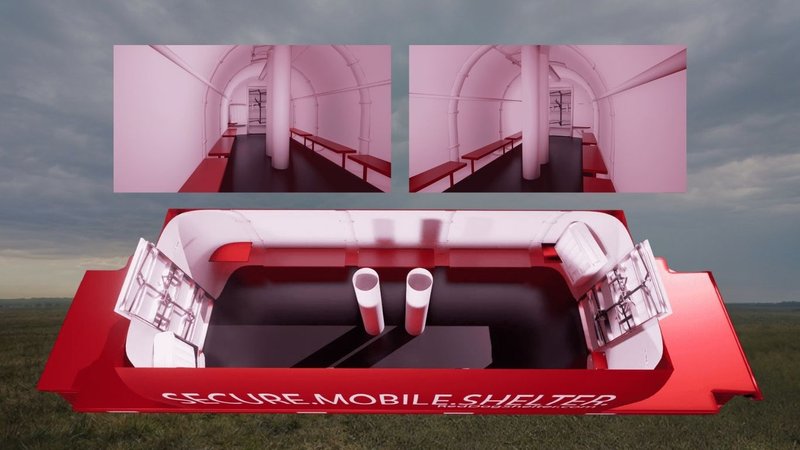
Red Dog builds every Big Dog from 100% A36 steel, with a 300-pound door, fireproof walls, and airtight debris protection. This assembly rating can stop the impact force of a 20,000-pound truck driven by EF-5 winds. Patented Aerodynamic Anchoring uses two vacuum tubes in the curved roof structure to create a pressure differential. This differential holds the unit to flat ground with increasing downward force as wind speed rises, requiring no bolts, no foundation, and no maintenance-dependent hardware. The combination of material grade, construction, and anchoring can maintain certified performance across the unit's full service life, through repeated deployments and transport cycles.
Red Dog Shelters delivers from yards in Moore, Oklahoma; Minden, Louisiana; and Lubbock, Texas. Lead times run as fast as 24 to 48 hours. For safety directors evaluating tornado-safe certified shelters, the testing record and third-party verification tell you more than the wind speed number alone. So does the engineering behind the anchoring and construction. See how independently verified above-ground protection fits your next project site.