

Between May and September, the afternoon heat index readings on a pipeline corridor in East Texas routinely exceed 110 degrees Fahrenheit. The nearest air-conditioned building is a construction trailer at the project office, 20 minutes away by truck. Crews working that stretch have two realistic options for heat recovery. One is using the shade from the equipment, where ambient air still tops 100 degrees. The other alternative is taking a water break in the open sun.
Neither option provides the controlled cool-down environment that federal health guidance calls for as core body temperature climbs. A mobile cooling station placed within walking distance of the active work zone fills that need. It provides climate-controlled recovery space that doesn't depend on permanent infrastructure.
What Heat Stress Costs Beyond the Medical Event
The National Institute for Occupational Safety and Health (NIOSH) publishes workplace recommendations on heat stress. It identifies engineering and administrative controls as the primary tools for reducing occupational heat exposure. The engineering part includes increasing air velocity and providing shielded or cooled recovery areas. Meanwhile, administrative controls include modifying work-rest cycles, limiting time in the heat, and increasing recovery time in a cool environment. On a remote site with no permanent cooled structure, the engineering-control side of this equation is often missing.
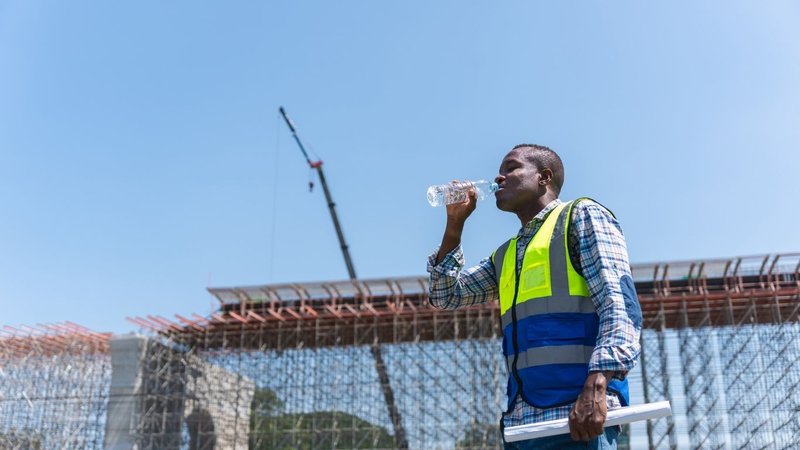
The costs of unmanaged heat stress extend beyond individual medical events. Heat exhaustion pulls a worker off the line for the rest of the shift. Heat-related dizziness and impaired reasoning raise the risk of secondary injuries, from dropped tools to falls from elevation. OSHA has identified occupational heat exposure as a growing hazard, with ongoing federal rulemaking underway. The trend in both regulation and enforcement is toward more explicit employer obligations around heat illness prevention. A seasonal safety plan that accounts for heat risk on paper but provides no climate-controlled recovery space misses the practical intent of these recommendations.
Where a Mobile Cooling Station Fits in the Work-Rest Cycle
NIOSH's heat stress guidance recommends modifying work-rest periods to give the body time to shed excess heat. Rest breaks should get longer and more frequent as temperature, humidity, and workload increase. The recovery environment matters as much as the rest duration. A 15-minute break in 105-degree shade provides far less thermal recovery than the same 15 minutes in a climate-controlled enclosure.
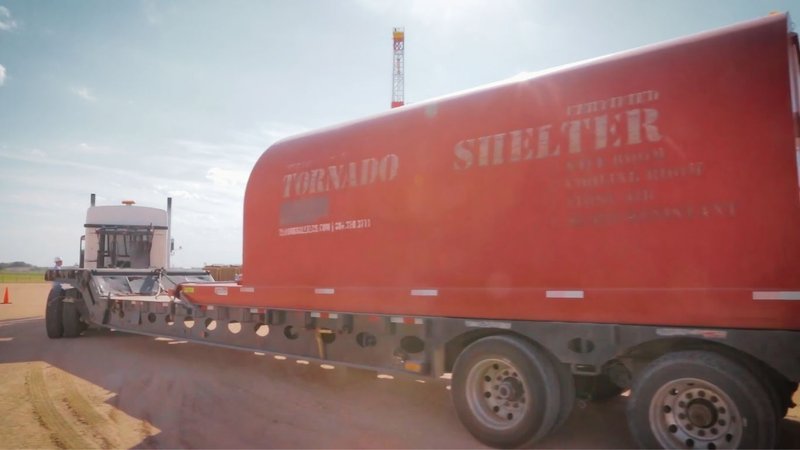
Red Dog Shelters' Big Dog units include dual air conditioners, heaters, bench seating, and a desk as standard equipment. Each also comes with a Rapid Cool Down station. The interior provides 288 square feet of climate-controlled space where crews can lower core body temperature, hydrate, and recover. On a site running staggered work-rest rotations, the cooling station absorbs a steady flow of workers cycling through breaks. No one has to leave the site or take a vehicle trip to a distant trailer.
Because Red Dog's patented Aerodynamic Anchoring does not require a structural foundation, the cooling station can sit directly next to the active work front instead of a predetermined fixed location. Two vacuum tubes in the curved roof structure create a pressure differential. This anchors the unit to flat ground with increasing downward force as wind speed rises. As the work zone moves, the cooling station moves along with it, keeping recovery space within walking distance of the crews who need it.
Seasonal Planning: Before the Heat Arrives
The most effective time to add a mobile cooling station to a safety plan is before the season's first heat advisory and not during it. Red Dog Shelters delivers from yards in Moore, Oklahoma; Minden, Louisiana; and Lubbock, Texas, with lead times as fast as 24 to 48 hours. Site-level planning, including generator staging, placement decisions, and crew training on the work-rest protocol, still benefits from lead time.
Pre-season planning should establish the heat index thresholds that trigger specific work-rest schedules. It should also designate the cooling station's location and train crews on how to use it as part of their rotation. New and unacclimatized workers need longer, more frequent rest breaks during their first 7 to 14 days on a hot site. Having the cooling station running before these workers arrive shortens the gap between exposure and available recovery.
For operations running simultaneous work zones across a large site, multiple units may be needed. Doing so keeps climate-controlled recovery within practical walking distance of every crew. Red Dog's lease model scales with the need. Units go on lease during the warm months and come off when temperatures drop, or they stay on year-round where cold stress mirrors the summer heat problem.
Certified Storm Protection From the Same Unit
A mobile cooling station that only provides heat relief is a single-purpose procurement. Red Dog's Big Dog units carry full FEMA P-361 and ICC 500 certification for 250 mph wind resistance and debris impact protection. This means the same unit cooling crews on a July afternoon can serve as a certified tornado shelter when a storm warning activates that evening. The 128-decibel siren alarm and strobe lights serve as the alert system. Emergency lighting keeps 32 occupants oriented inside the sealed steel structure if primary power drops during the event.
Construction is 100% A36 steel, with a 300-pound secured door, fireproof walls, and airtight debris protection. This assembly is rated to stop the impact force of a 20,000-pound truck driven by EF-5 winds. The units also function as Faraday cages when properly grounded, adding lightning protection. This matters on southern and central U.S. job sites, where late-afternoon convective weather often brings electrical storms.
A seasonal safety plan that addresses heat stress, severe weather, and lightning from one piece of equipment simplifies procurement and cuts the site's equipment footprint. It also keeps climate-controlled recovery space and certified storm protection co-located where crews actually work. Lease a Red Dog Shelter to put mobile cooling and FEMA-rated storm protection on your site before the next heat season begins.