
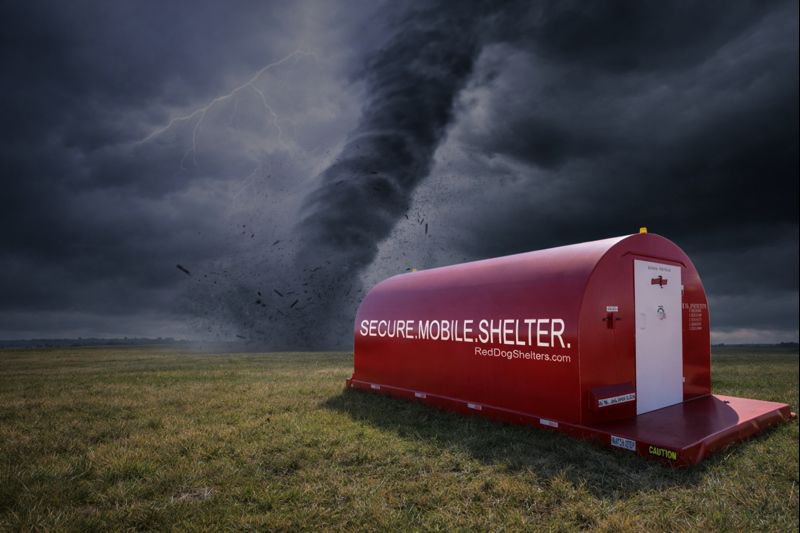
A tornado warning can drop with 10 minutes of lead time. When that happens, shelter access is not a comfort issue. It is a life-safety decision. Yet traditional storm shelter construction has always favored permanence over speed. It treats installation as a one-time infrastructure project, not an operational tool.
That model is changing. For construction sites, oilfield operations, and large-scale industrial projects, the ability to deploy certified protection fast, without ground prep or mechanical anchoring, now defines a real engineering category. As a result, safety planners are rethinking how they approach crew protection from the ground up.
The Problem With Conventional Storm Shelter Construction
Traditional below-grade and permanently anchored shelters come with site constraints that are easy to miss during planning. So before specifying a shelter type, it helps to understand what conventional installation actually demands.
Consider what most fixed installations require:
- Excavation and site grading
- Concrete pad preparation or ground anchoring
- Inspection and permitting timelines
- Fixed placement for the life of the structure
- Significant lead time before the unit is ready for use
For a permanent facility, those steps are manageable. For a temporary drilling lease, a phased construction project, or a remote utility site, however, they create delays and costs that add up fast. And once the installation is complete, the shelter stays put. It cannot follow the project when work zones shift or headcount moves.
That is the gap rapid-deployment shelter design solves directly.
What Rapid Deployment Actually Means in Practice
Rapid deployment in storm shelter construction is not only about how fast a unit shows up on site. It covers the full sequence from delivery to occupancy-ready status.
Above-ground units with aerodynamic anchoring technology reach full security in under 10 minutes after placement. The Red Dog Big Dog model, for example, needs no concrete foundation, no earth anchors, and no mechanical attachment to the ground. Instead, the shelter's shape creates a downward force as wind speed rises. This pressure differential grows stronger with the storm rather than relying on pre-installed hardware.

As a result, the shelter reaches full security at the moment workers set it down. The protection level does not depend on how long the unit has been on site.
For sites that go live on short notice, this matters. Safety planners no longer have to choose between hitting a project start date and having certified crew protection ready from day one.
Why Mobility Changes the Safety Equation on Large Projects
Fixed shelter placement made sense when storm shelter construction meant a permanent build. But when shelters can move, site planning changes as well.
Instead of placing one large shelter at a central point, operators can spread units across the project footprint so workers stay close to protection at all times. On a large construction site or a multi-pad drilling operation, response time is the key variable. A shelter that requires a four-minute walk through active equipment zones does not offer the same protection as one within 90 seconds of most crew positions.
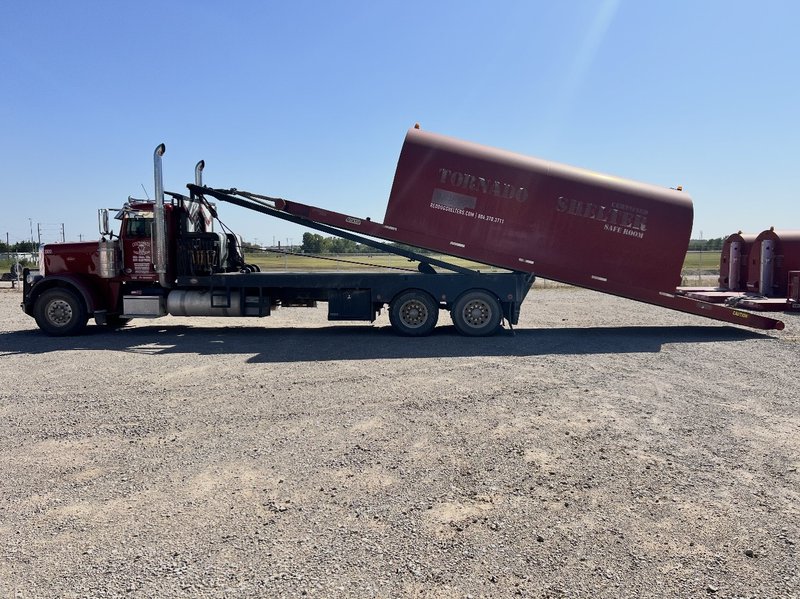
How portable storm shelters are transported and deployed covers the logistics in detail. But the core point is this: mobility lets shelter placement follow the actual work pattern rather than locking crews into a fixed layout decided before the project began.
When work zones shift, the shelters shift too. Red Dog units move by winch truck, or customers with the right equipment can reposition them independently. This is especially useful on phased projects where crew concentration areas change over months.
Deployment Speed and Compliance Are Not in Conflict
Safety managers sometimes wonder whether faster deployment means lower certification standards. It does not.
Third-party engineers individually stamp and certify each Red Dog shelter to meet:
- FEMA 361 and 320 federal safe room guidelines
- ICC 500 International Code Council storm shelter standards
- NSSA National Storm Shelter Association requirements
Engineers at the Texas Tech Wind Science and Engineering Research Center impact-test these units. They build each shelter to handle 250+ mph winds and a 20,000-pound object strike. Multiple U.S. patents cover the aerodynamic anchoring system.
For EHS managers handling compliance, the certification package carries the same weight as a fixed installation. A mobile format does not lower the shelter's standing under FEMA or ICC 500 requirements. If you are comparing above-ground units with in-ground options for a temporary lease site, the challenges of in-ground storm shelters on temporary lease sites is worth reading before you finalize a placement decision.
Scalability: Matching Shelter Capacity to Each Project Phase
Crew size on construction and oilfield sites never stays fixed. Early phases bring smaller teams focused on site prep and equipment staging. Peak phases can mean dozens of workers spread across multiple zones. Then late-stage work reduces headcount again.
Fixed shelter construction locks capacity at the number specified during the initial installation. Rapid-deployment units, by contrast, let operators scale the shelter program as the project grows or winds down:
- Add units as headcount increases through project phases
- Distribute units as work areas spread across a larger footprint
- Pull back units and relocate them as specific zones close
- Move equipment to the next project rather than leaving it behind
This flexibility also helps organizations running multiple active projects at once. Instead of units sitting idle at a finished location, a leased fleet can shift to wherever active site needs are greatest.
For teams comparing purchase against lease timing, tornado shelter purchase versus rental for construction timelines covers the operational and financial factors in more detail.
Storm Shelter Construction Is Moving Toward the Site
The traditional model required sites to adapt to shelter timelines, placement constraints, and fixed infrastructure decisions. Today, that relationship is reversing.
Rapid-deployment above-ground shelters meet the same protection standards as fixed builds. They are ready within minutes of placement, movable as projects change, and scalable to crew size at any phase. Together, those qualities address the real challenges safety planners face on active sites, not just on paper.
For sites where conventional storm shelter construction is not practical, or where protection needs to move with the work, Red Dog Shelters offers above-ground units for lease with 24 to 48 hour delivery. Contact the Red Dog team to talk through your site layout, crew size, and project timeline.