

Effective construction site weather protection starts with one question: how quickly can every worker reach shelter when a warning hits? On an active construction site, the answer depends less on the shelter itself and more on where it's placed, how fast it deploys, and whether it can move as the project does. Mobile above-ground shelters change that calculation significantly, and the difference shows up directly in downtime, response time, and crew safety outcomes.
Why Fixed Shelter Solutions Create Operational Problems
Traditional underground or permanent above-ground shelters solve one problem while creating several others. They require excavation, concrete work, and foundation installation before a single crew member can use them. On active construction sites, that process competes directly with project timelines.
The deeper issue is placement. A fixed shelter installed at the edge of a 20-acre site may be too far from active work zones to be practical during a fast-developing storm. OSHA's tornado preparedness guidelines emphasize response time as a critical factor, yet permanent shelter placement is often dictated by where construction was easiest rather than where workers actually need it.
Additional friction points with fixed approaches include:
- Inability to reposition as work zones shift across project phases
- High upfront installation cost, regardless of project duration
- Significant site restoration required after project completion
- Long lead times that leave crews unprotected during early construction stages
For a closer look at why in-ground options create specific complications on lease sites, this breakdown of underground shelter challenges covers the key operational and logistical issues in detail.
How Mobile Shelters Strengthen Construction Site Weather Protection
Mobile above-ground shelters solve the placement problem directly. Because they require no foundation, excavation, or mechanical anchoring, they can be deployed in under 10 minutes and repositioned as the project evolves.
Red Dog Shelters uses a patented Aerodynamic Anchoring system that creates a downward force as wind speed increases, a pressure differential that pulls the unit tighter to the ground without any ground penetration. The result is FEMA 361-compliant protection that can be placed on dirt, gravel, or asphalt and moved with a winch truck when site conditions change.
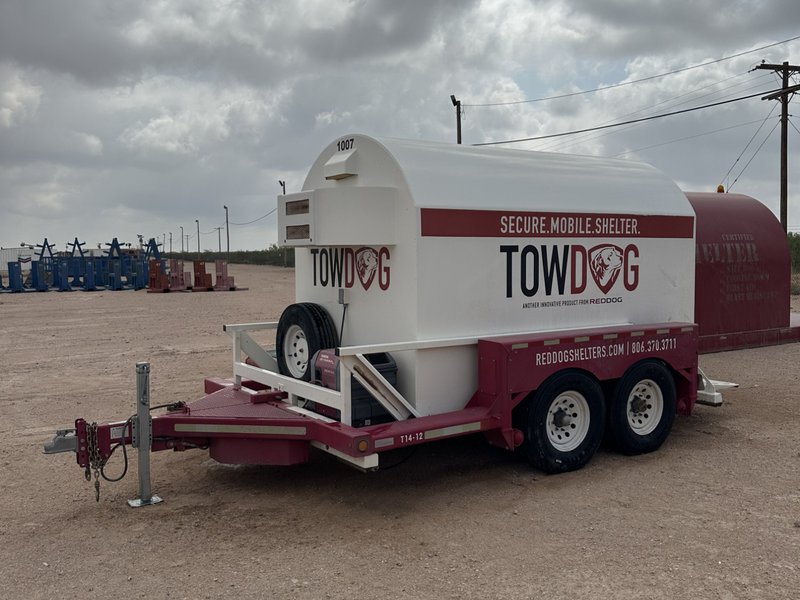
For construction projects with shifting work zones, mobility matters in two concrete ways:
- Faster response times. Shelters can be stationed near active work areas rather than at a fixed perimeter. When a warning drops, crews walk minutes instead of running the length of the site.
- Faster return to work. Once the threat passes, there's no post-storm damage assessment for a buried structure, no waterlogged interior, no access logistics. Above-ground units are ready to re-enter and work resumes sooner.
Scalability Across Project Phases
Construction headcount is rarely static. A site that starts with a crew of 20 can scale to 200 before peak phase. A shelter solution that made sense at groundbreaking may be dangerously undersized six months later.
Mobile shelters address this directly. As crew size grows, additional units can be added. As the project winds down and headcount decreases, units can be removed. This scalability is particularly valuable for large infrastructure projects where multiple contractors are phased in and out over months or years.
Red Dog's Big Dog shelter accommodates 32 or more personnel and can be distributed across a large site so no crew is more than a short walk from protection. That distribution model also reduces the risk of a single shelter becoming a bottleneck during a warning.
If you're working through a lease versus purchase decision for a project with a defined timeline, this comparison of tornado shelter sale vs. rental options lays out the tradeoffs clearly.
Multi-Purpose Use Between Weather Events
Downtime reduction extends beyond storm response. Above-ground mobile shelters serve operational functions outside of severe weather emergencies, which improves overall return on the safety investment.
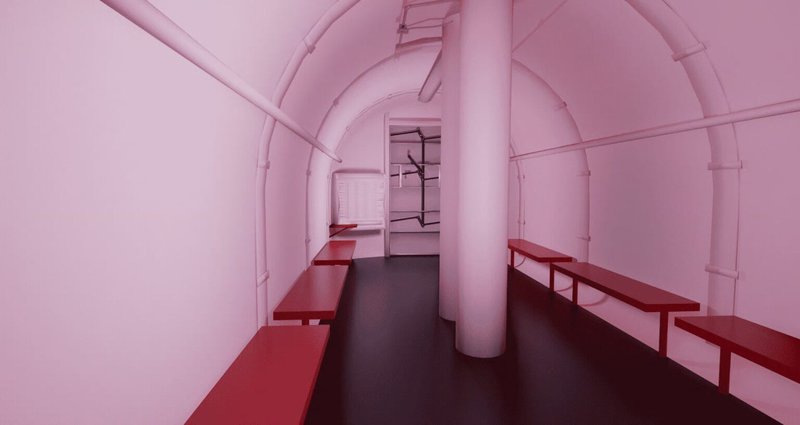
Common between-storm uses include:
- Heat stress mitigation and rapid cool-down stations in high-temperature environments
- Emergency muster points during site incidents unrelated to weather
- Faraday cage-style protection during lightning events, given the steel construction
- Temporary office or meeting space on remote sites with limited infrastructure
- Safety briefings and crew coordination in a climate-controlled setting
Each of these use cases puts the unit to work during the long stretches between weather events, reducing the perception that severe weather protection is an idle asset.
Protection That Moves With the Work
The cost of a weather-related work stoppage goes beyond the hours lost. There's crew demoralization, potential OSHA scrutiny, and the reputational risk of a preventable incident. Mobile shelters reduce each of those exposures by making protection fast, accessible, and aligned with how construction sites actually operate.
A shelter that can be placed anywhere, repositioned as needed, and scaled with the crew isn't a passive safety asset. It's an active part of site planning.
Contact Red Dog Shelters to discuss deployment options, site layout, or leasing terms for your project.