
When procuring safe rooms for site workers, what features should companies prioritize? The debate will be far fro over as far as convenience, safety, and utility is concerned. However, storm shelter ventilation should not be seen as merely a comfort feature. Both FEMA P-361 and ICC 500 build it in as a requirement. These are the two primary standards governing the design and construction of certified storm shelters. A shelter that protects against an EF-5 tornado but fails to maintain breathable air has not fulfilled its core purpose.
Yet ventilation is one of the least scrutinized specifications when safety directors evaluate shelter options. As a result, teams often discover the gap after deployment. A 30-person crew packs in during a July storm and conditions deteriorate within minutes.
Why Storm Shelter Ventilation Is a Life-Safety Requirement
Standards issued by the Federal Emergency Management Agency’s (FEMA), in particular ICC 500 Section 702, sets minimum natural ventilation requirements for certified storm shelters. Community shelters with occupancy of 50 or fewer require at least five square inches of venting area per occupant. Shelters with occupancy above 50 require six square inches per occupant. For a Red Dog Big Dog unit holding 32 people, that means a minimum of 160 square inches of protected ventilation area.
However, meeting the minimum ventilation area is only part of the requirement. In addition, every ventilation opening must pass the same debris impact testing as the shelter walls and door. That means louvers and vent covers must withstand a 15-pound 2×4 traveling at 100 mph without failure. A ventilation opening that compromises the structural envelope provides neither clean air nor protection.
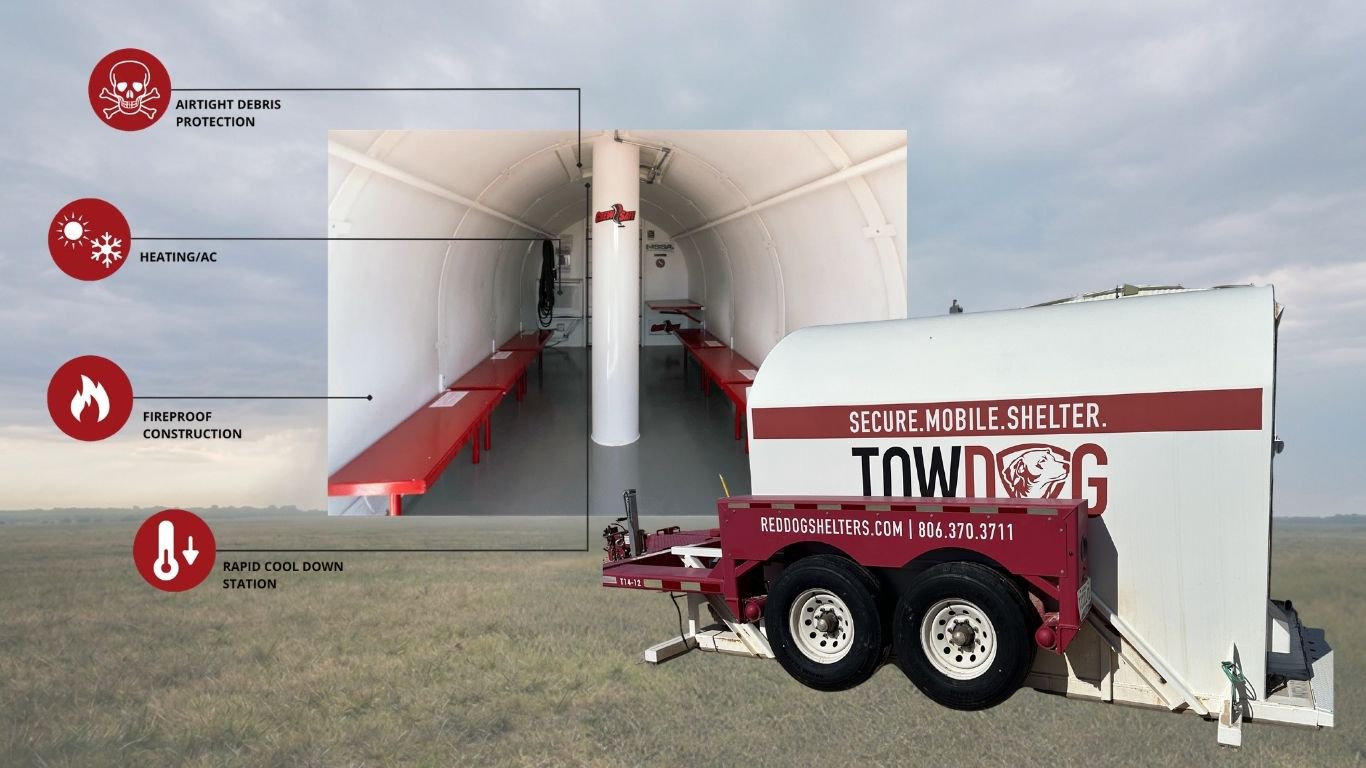
Red Dog shelters meet and exceed FEMA P-320 and ICC 500 ventilation requirements. Furthermore, each unit includes dual air conditioning systems. That means climate-controlled airflow is available for every event, not just passive ventilation.
The Difference Between Natural and Mechanical Ventilation in Shelter Design
ICC 500 requires tornado storm shelters to provide at least natural ventilation. Mechanical ventilation is additionally required for hurricane shelters with occupancy above 50. For industrial sites, however, the distinction matters more than the standard requires.
Natural ventilation alone may not be sufficient for a fully occupied shelter in a high-heat environment. For instance, a crew of 30 sheltering during a tornado warning on a 100-degree afternoon generates significant body heat in a confined space. Without active cooling, heat stress develops fast. Workers entering the shelter already exposed to high temperatures face the greatest risk.
In contrast, a shelter with mechanical ventilation and active air conditioning manages both air quality and temperature simultaneously. That is why Red Dog units include dual air conditioners rated for the full occupant capacity of each unit. The system runs on on-site power or a 5kW generator, keeping air circulating and temperatures manageable regardless of exterior conditions.
How Ventilation Interacts With Shelter Occupancy and Duration
Storm shelter ventilation requirements scale with occupancy for a reason. As the number of people in a confined space increases, oxygen consumption rises and carbon dioxide concentration builds faster. For a short event of five to ten minutes, natural ventilation in a properly designed unit is sufficient. For events extending beyond 15 minutes, active airflow becomes a meaningful safety factor.
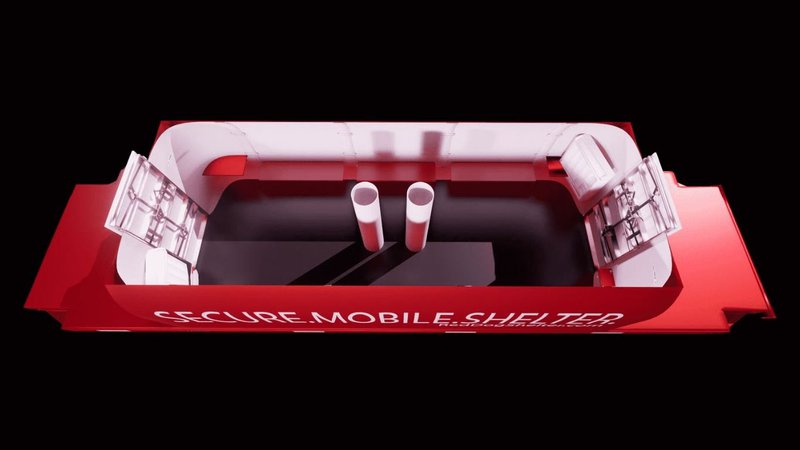
Red Dog Big Dog units measure 35 feet by 8.25 feet. That provides 288 square feet of interior space for up to 32 occupants. That footprint, combined with compliant ventilation and dual air conditioning, gives each occupant adequate air volume for extended shelter events. Moreover, emergency lighting and a 128-decibel warning siren support situational awareness inside the unit when exterior conditions reduce visibility.
Similarly, the ventilation design accounts for debris protection without compromising airflow. Vents and louvers meet the ICC 500 Chapter 8 debris impact standard. That means the shelter maintains structural integrity and ventilation capacity under the same wind load conditions.
Proper Ventilation on Industrial and Remote Sites
For industrial crews working on oil fields, pipeline routes, or large construction sites in high-temperature regions, ventilation is not an abstract specification. It is the factor that determines whether a shelter stays safe for the full duration of a severe weather event.
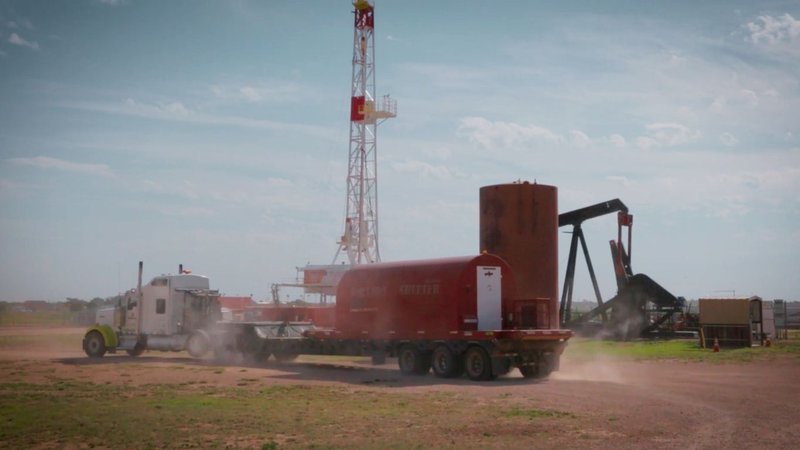
Still, many shelters deployed on industrial sites carry only natural ventilation with no active cooling. That meets the minimum standard for tornado protection. However, it does not address the heat stress exposure workers bring with them when they enter the shelter. For that reason, Red Dog builds mechanical ventilation and climate control into every unit as a baseline, not an upgrade.
By contrast, a shelter meeting only the minimum standard may protect occupants from wind and debris. It may still expose them to a secondary heat hazard during the event. That is a gap that becomes visible only under real operating conditions.
Evaluating Ventilation Design Before Deployment
Before deploying a shelter on an industrial site, safety directors should confirm three things about the ventilation design. First, does the unit meet ICC 500 Section 702 minimum ventilation area requirements for its rated occupancy? Second, do all ventilation openings carry certified debris impact protection? Third, does the unit include active climate control for the full crew during an extended event?
Therefore, a shelter answering yes to all three meets the standard that industrial operations demand. Ultimately, storm shelter ventilation is the specification that separates a shelter that survives a storm from one that keeps its occupants safe throughout it.
Red Dog units meet and exceed all three criteria. If your current shelter does not, reach out to learn more or arrange delivery.