

Every occupied storm shelter needs a real plan for indoor air, not just steel walls. Safety directors know that storm shelter ventilation keeps a sealed space breathable and safe for workers. During an audit, that airflow design becomes proof your shelter protects people the way you claim.
Federal safety rules do not name storm shelters directly, but general duty standards still apply. We will also cover how Red Dog balances fresh air with debris protection on every unit. Read on to learn exactly what your team should check before an audit begins.
What Is Storm Shelter Ventilation and Why Does OSHA Monitor This?
“Storm shelter ventilation” describes the vents and louvers that move air through a sealed unit. Federal rules require every employer, including Red Dog customers, to keep work areas free of known hazards. The Occupational Safety and Health Administration (OSHA) treats a sealed shelter as it would any other confined workspace.
Why Storm Shelter Ventilation Matters for OSHA Compliance
A steel shelter holding up to 32 people during a storm becomes a real workplace, not just a box. Safety directors get asked hard questions about that space long after the storm has passed. Inspectors want proof that people could breathe safely for the whole time they sheltered inside.
Federal safety rules do not single out shelters, so general standards carry the weight instead. The general duty clause tells employers to remove hazards a reasonable person would recognize and fix. Stale air inside a packed, sealed room turns storm shelter ventilation into a real hazard control issue.
Does OSHA Have a Specific Ventilation Standard?
No, OSHA has not written a rule aimed only at storm shelter airflow or occupied safe rooms. Instead, the agency leans on the general duty clause and its broader indoor air quality guidance. Safety directors still carry the duty to keep shelter air breathable during every storm event.
According to OSHA's indoor air quality guidance, no rule names shelter airflow directly, but the general duty clause still applies. Our breakdown of ventilation compliance rules explains what that duty looks like in practice.
None of this means your shelter program sits outside federal safety expectations during a real storm. It means you need to document your airflow choices the same way you document any other safeguard. As a result, good documentation becomes your strongest evidence when an OSHA inspector asks how the shelter stays safe.
Balancing Airflow and Debris Protection in a Sealed Shelter
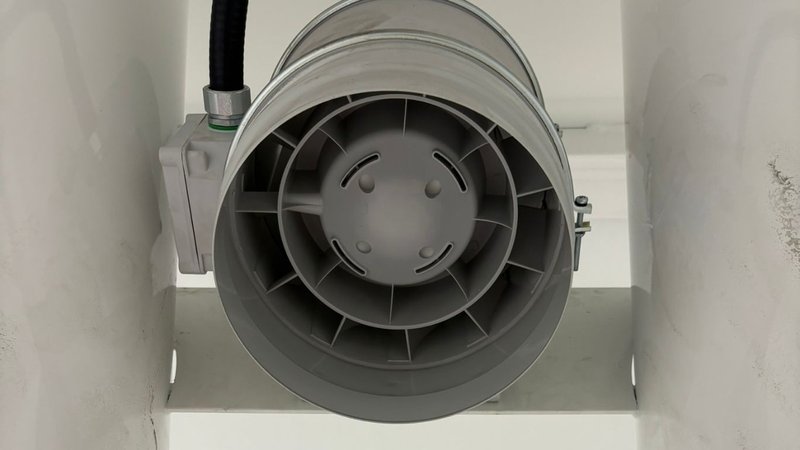
Every Red Dog shelter also has two separate air systems working for two different jobs. Two roof tubes create a pressure differential that anchors the unit to flat ground as wind builds. Wall vents and louvers handle a separate job, moving fresh air in without opening the shelter to debris.
Getting storm shelter ventilation right depends on louver angles that block debris but still let air move. Our ventilation safety feature guide walks through how engineers test each vent path for wind-driven debris.
- You get no mechanical anchoring or foundation work, so site placement never delays your ventilation plan.
- Units scale with headcount, so airflow capacity grows or shrinks as your crew size changes.
- Shelters spread across a large site, cutting travel time when storms build faster than expected.
- You can reposition a unit yourself, or our winch truck crew can move it for you.
- Each shelter still doubles as a Faraday cage or muster point, so ventilation supports more than storms.
None of these features replace good airflow, but together they make ventilation easier to manage on site. Dual air conditioners and heaters then keep that filtered air at a safe, workable temperature. Learn more about keeping shelters comfortable for the full time crews spend sheltering in place.
How to Document Storm Shelter Ventilation for an OSHA Audit
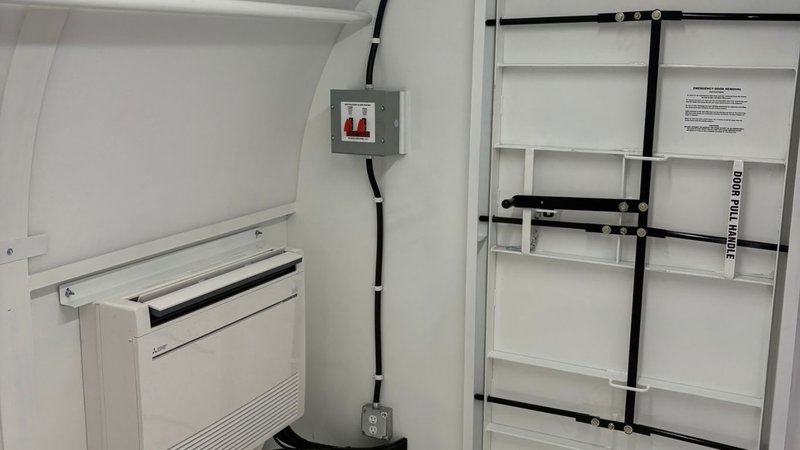
A storm can keep your crew sheltered for an hour or more before conditions turn safe again. Dual air conditioners, heaters, and a Rapid Cool Down station keep that sealed space livable the whole time. Fresh airflow works alongside that gear, so nobody inside runs low on breathable air during a long wait.
Power matters too, since a shelter running on-site power or a 5kW generator still needs steady airflow. Our guide on FEMA and NSSA testing standards explains what auditors typically check first.
Safety directors should also log storm shelter ventilation checks the same way they log fire extinguisher inspections. Keep dated records of vent cleaning, filter swaps, and any repairs made to the louver system. An inspector who sees dated logs gains confidence fast, and that confidence shortens the whole audit visit.
Occupancy math matters here as well, since FEMA rates commercial shelters at 5 square feet per person. A 20-by-8-foot cabin earns a rated capacity of 32 people under that standard. Numbers like that hold up during an audit, unlike max-occupancy claims built on looser math.
Is Your Storm Shelter Ventilation Audit-Ready?
Good airflow design should never be the detail that surprises you during an OSHA visit. Red Dog builds vents, louvers, dual A/C, and heaters into every shelter from day one. Together, this gear keeps your crew safe and your paperwork ready before anyone asks for proof.
Every job site is different, and unit count, layout, and lease length all shape your final setup. Our team can walk through pricing details once we understand your site and your headcount. Reach out to our ventilation and safety team to review your storm shelter ventilation plan today.
Leave a Reply