

The phrase “storm safe” appears often in discussions about severe weather protection. Communities, job sites, and homeowners all want assurance that their refuge space will perform during a violent storm. However, the term can sometimes be misunderstood or used loosely without context. Understanding storm safe shelters requires looking closely at how these structures are tested and evaluated.
Independent standards help determine whether a shelter can withstand high winds, airborne debris, and pressure changes during extreme events. These benchmarks also guide manufacturers, engineers, and safety professionals when designing protective structures.
Testing standards serve a critical role in building trust. They provide objective measurements rather than marketing claims. When buyers understand how testing works, they gain confidence in the shelter they choose and its ability to protect occupants during a tornado or severe storm.
The Role of National Safety Standards in Storm Safe Shelters
Severe weather protection relies on widely recognized shelter safety standards. Two of the most important guidelines in the United States come from FEMA and the International Code Council. FEMA publications such as FEMA 320 and FEMA 361 outline design criteria for residential and community safe rooms. These documents describe structural expectations and occupant safety considerations.
The ICC 500 standard expands on these recommendations. It provides detailed requirements for tornado and hurricane shelters used in residential, commercial, and public environments. Engineers and manufacturers follow these guidelines when developing structures intended to resist extreme weather forces.
Standards help create consistency across the industry. When shelters meet these criteria, buyers know that the structure follows tested engineering practices. Compliance also supports building inspections and regulatory review in many jurisdictions.
These national guidelines establish the baseline for what “storm safe” truly means.
Debris Impact and Wind Resistance Testing for Storm Safe Shelters
One of the most important parts of shelter testing involves debris impact resistance. Tornado winds can turn everyday objects into dangerous projectiles. Wooden boards, metal fragments, and construction debris may strike a shelter at extremely high speed.
Testing simulates this threat using controlled impact trials. Laboratories launch heavy projectiles toward shelter walls, doors, and structural panels. These tests evaluate whether the material can resist penetration during a tornado event.
Wind pressure testing is another key evaluation. Tornadoes generate powerful forces that push and pull on a structure from different directions. Testing chambers simulate these pressures to determine whether the shelter can maintain structural integrity.
Passing both impact and pressure evaluations demonstrates that the structure can withstand conditions similar to those seen during severe storms. These results provide measurable proof of performance rather than assumptions about durability.
Ventilation, Occupant Safety, and Structural Integrity
Storm protection does not depend solely on strong walls. Occupant safety also requires careful attention to interior conditions. Shelters must provide enough ventilation to maintain breathable air during occupancy.
FEMA guidelines specify a minimum vent area based on the number of people inside the structure. Adequate airflow prevents heat buildup and supports healthy oxygen levels during extended warnings. Properly designed ventilation openings allow air movement while blocking debris entry.
Interior layout also contributes to safety. Clear pathways help people enter quickly during a warning. Seating arrangements and open floor space prevent overcrowding and allow supervisors to account for occupants.
Structural integrity extends beyond the outer shell. Doors, hinges, locks, and frame components must perform under high-pressure conditions. Weak entry systems can compromise an otherwise strong structure. Testing standards evaluate these elements to ensure the entire shelter system functions reliably.
The Importance of Independent Verification
Independent verification plays a central role in shelter credibility. Testing conducted by third-party laboratories provides an objective evaluation of structural performance. These facilities use specialized equipment to recreate tornado conditions in a controlled environment.
Independent testing reduces uncertainty for buyers. Safety leaders can review documented results rather than relying on promotional claims. This transparency strengthens trust between manufacturers and the organizations that depend on their products.
Documentation from reputable testing centers often includes detailed reports describing the procedures used and the results achieved. These reports demonstrate whether the shelter met or exceeded required standards.
Verification also encourages continual improvement within the industry. Manufacturers refine designs and materials based on testing data. Over time, this process leads to stronger and more reliable shelters for communities and job sites.
Proven Engineering in Modern Shelter Design
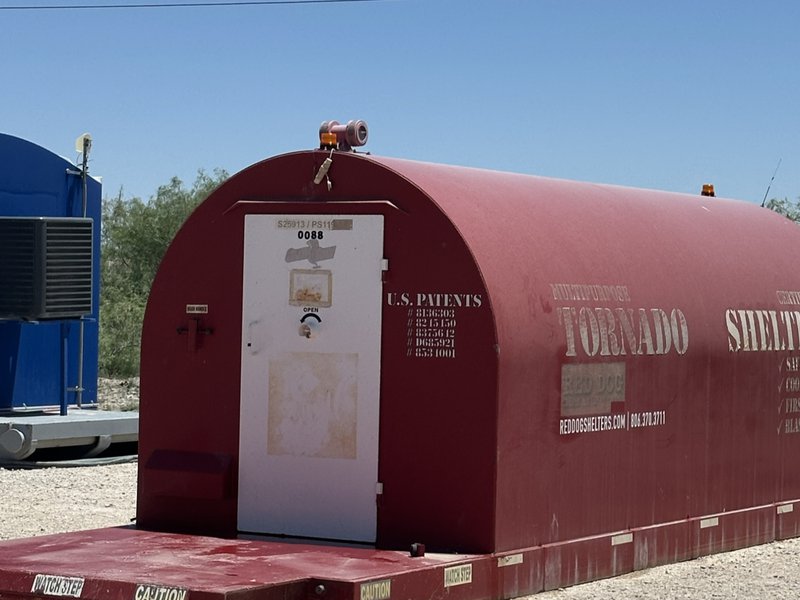
Many modern shelter manufacturers align their designs with recognized testing standards. Red Dog Shelters builds tornado and severe weather protection that reflects these engineering expectations. Their structures are constructed from thick A36 steel and have been tested by the Texas Tech Wind Science and Engineering Research Center.
Each shelter uses patented aerodynamic anchoring technology. This design allows the unit to secure itself once placed on flat ground without mechanical anchoring or foundations. The aerodynamic profile helps distribute wind forces across the exterior.
A standard Red Dog shelter measures 35 feet long, 8.25 feet wide, and 8.25 feet high. Interior space totals 288 square feet. FEMA standards support a comfortable capacity for 32 occupants, while oilfield operations have reported up to 54 individuals during emergency conditions.
Ventilation meets or exceeds FEMA 320 and ICC 500 guidance with four square inches per occupant. Interior amenities include dual air conditioners, heaters, benches, a desk, and a rapid cool-down station. Power can run from an on-site source or an operator-supplied 5kW generator.
These design features combine structural strength with daily usability. Regular use increases familiarity and improves response speed during severe weather alerts.
Choose Protection Backed by Verified Standards
Understanding testing standards helps clarify what it truly means to be storm safe. Reliable shelters demonstrate their strength through recognized evaluation methods. Debris resistance, wind pressure testing, ventilation design, and independent verification all contribute to occupant protection.
Red Dog Shelters provides tornado protection designed for demanding industrial and remote environments. Their shelters combine tested materials with aerodynamic stability and rapid deployment capability. Send us a message today to discuss your workforce size, site layout, and severe weather exposure.