

Severe weather on a job site rarely arrives with a tornado warning and nothing else. Straight-line winds, derechos, and sudden microbursts can hit your crew with almost no warning at all. The right wind shelters give your crew one clear plan that covers every one of them.
Loose material, scaffolding, and crane loads turn into fast-moving hazards once winds pick up fast. Your site needs one shelter strategy that works whether the threat is a tornado or a gust front. Below, you will see how a rated wind shelter covers tornadoes and the wind hazards crews often miss.
Do Wind Shelters Protect Against More Than Tornadoes?
Yes, a well-built wind shelter protects your crew from tornadoes and other severe wind events too. Straight-line winds, derechos, and microbursts can strike fast and turn loose gear into dangerous projectiles. A Red Dog shelter rated for extreme wind and debris impact covers every one of these hazards.
- Tornadoes get the headlines, but they aren't the only wind hazard on a construction site.
- According to the National Weather Service, a derecho can send gusts over 240 miles per hour, often with just minutes of warning.
- Microbursts drop suddenly from a storm cell and push wind straight toward the ground, snapping scaffolding and flipping loose equipment fast.
- Crane loads swing hard in these gusts, turning a routine lift into a serious safety risk.
- Loose plywood, ladders, and pallets become airborne debris the moment a wind gust hits hard.
- Our guide on debris impact risks covers how flying material threatens crews on open sites.
- Even small tools turn dangerous once wind speed climbs past a site's normal range.
Straight-line events like these do not care whether a storm carries a tornado warning or not. As a result, rated wind shelters give your crew one plan that covers every one of them.
One Shelter Plan for Every High-Wind Event on Site
Every job site needs a clear rule for when wind conditions get too dangerous to work in. The Occupational Safety and Health Administration (OSHA) sets safety rules for outdoor work in high wind. According to OSHA guidance, crews hoisting workers by crane must pause once gusts pass 20 mph.
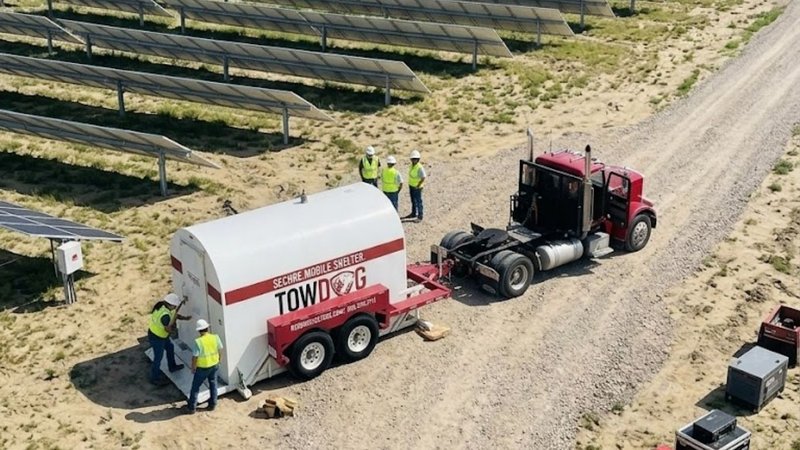
In turn, one set of wind shelters gives your crew a single plan for each hazard. Since it is one rated shelter, it covers tornadoes, straight-line winds, and sudden gusts without extra training.
Our shelters carry a 250 mph wind rating and stop debris impact rated to 100 mph. Its rating covers wind speeds from tornadoes, derechos, and the strongest straight-line wind events alike. So much of that protection starts with how the shelter grips the ground below it.
How the Vacuum Tubes Create a Downward Force
Two vacuum tubes built into the curved roof create a pressure differential, not suction, as wind speed rises. The passive, wind-powered force pulls the shelter down and grows stronger as gusts build, not weaker. No pump, seal, or mechanical anchor is needed to hold a shelter firmly to open ground.
No foundation work or mechanical anchoring means your crew sets up shelter fast on any site. Our piece on aerodynamic anchoring explains how this design lowers setup cost and time overall. From there, it works the same way no matter which type of high wind hits next.
Wind Shelters Built to Move and Scale With Your Project
A job site changes fast, and your wind shelters need to keep pace with it. However, crew size still grows and shrinks as the project phases move forward and back. For example, our shelter capacity options adapt to a site through every stage of work.
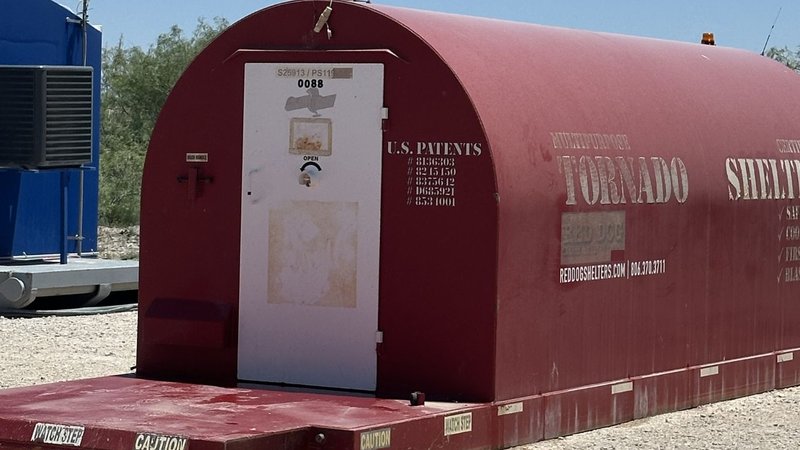
- Red Dog shelters need no foundation work or mechanical anchoring, so crews can place them anywhere flat.
- You can add units as headcount grows and remove them as the project winds down.
- Units spread across a large site give every crew fast access when storms build quickly.
- You can move a shelter yourself, or our winch truck team repositions it for you.
- Each shelter also works as a lightning-safe Faraday cage and a muster point during emergencies.
A shelter fleet like this keeps every crew close to safety no matter where work happens. Crews also use these units as muster points and cooling or warming stations beyond storm season. Our article on multi-purpose shelter use covers these extra functions in more detail.
Ready to Cover Every High-Wind Risk on Your Site?
Wind risk on a job site is not just about tornadoes anymore, as storms keep changing. Straight-line winds and derechos can hit with almost no warning, putting crews and gear at risk. One rated shelter, built for extreme wind and debris impact, covers every one of these threats.
Pricing depends on your project length and how many units your crew needs on-site. Our team walks you through the right setup for your site, crew size, and budget. Reach out to contact our team today and build a wind shelter plan your crew can trust.