
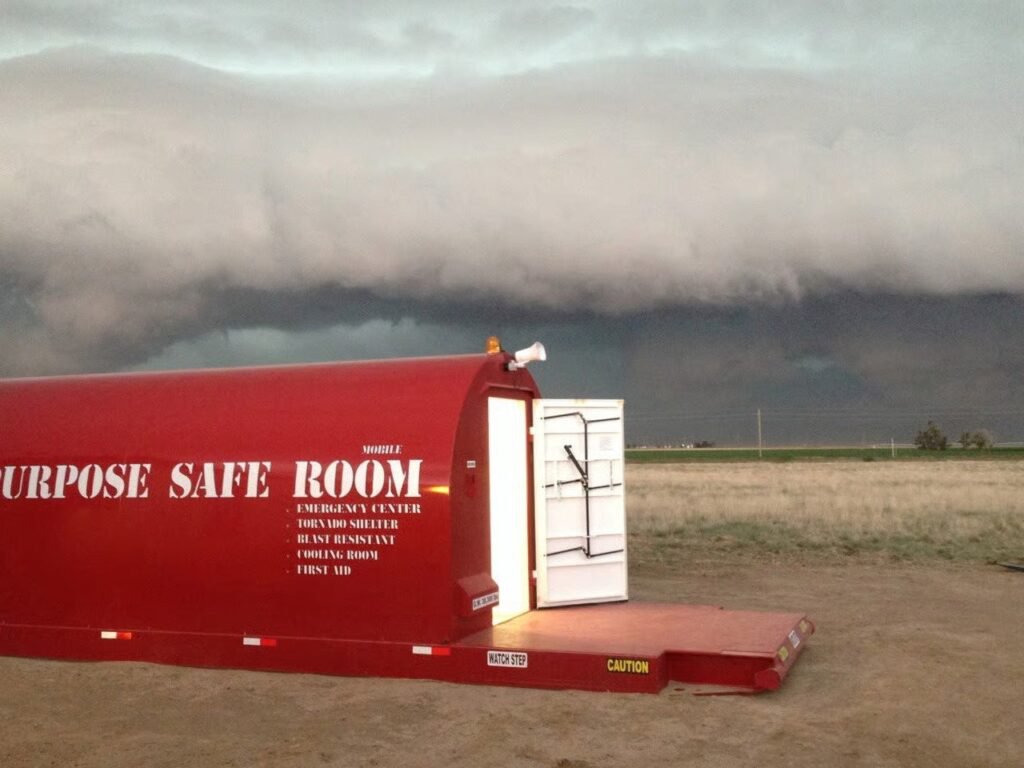
Severe weather doesn't pause for uptime commitments. Mission critical facilities safety planning has to account for one of the most disruptive and unpredictable threats on the operational calendar: extreme wind events. For data centers, utility substations, and petrochemical plants, a tornado warning isn't just a safety drill; it's an operational crisis in real time.
The challenge isn't just structural. It's about protecting the people who keep these facilities running when conditions deteriorate fast.
Why Mission-Critical Sites Face Elevated Risk
Mission-critical facilities share a few characteristics that make severe weather planning more complicated than it looks on paper.
First, many of them are built on large parcels of land in regions where affordable acreage intersects with power infrastructure. Those regions often fall within high-frequency tornado and severe storm corridors across the central and southern United States.
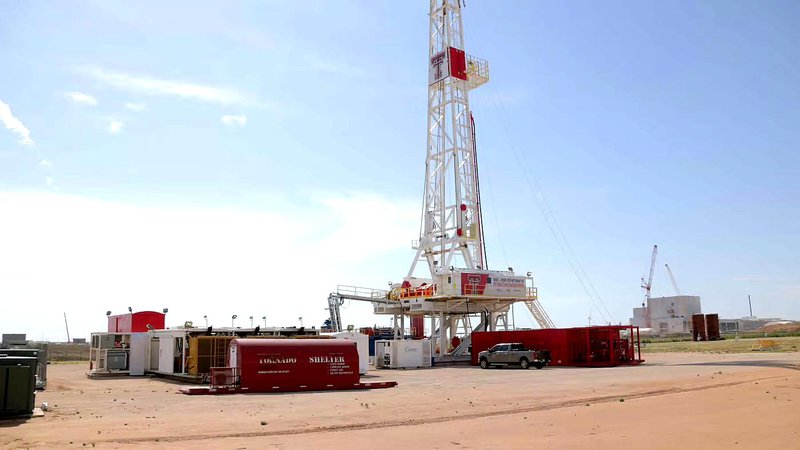
Second, these facilities operate continuously. Rotating shift crews, contractors, and maintenance personnel cycle through at all hours. When a warning comes in, there may be dozens of workers spread across an outdoor yard, a construction addition, or an equipment pad with very little time to react.
Third, the infrastructure itself creates constraints. Underground shelter options that work on a clean lot become far more complicated when existing electrical conduit, cooling lines, fiber runs, and concrete slabs are already in the ground. In-ground shelters pose real challenges for temporary and evolving sites, and those same constraints apply on permanent mission-critical campuses where subsurface systems are dense and disruption is costly.
Mission Critical Facilities Safety Starts With Response Time
FEMA guidance and ICC 500 standards define performance benchmarks for shelter construction. What those standards don't capture is the operational reality of getting a large rotating crew to a safe location in under three minutes.
Warning times from the National Weather Service can be short. A tornado that develops near a facility may provide only a few minutes of actionable lead time. That reality shapes every shelter decision.
Key factors that affect crew response:
- Distance to shelter: Workers spread across a large campus may not reach a single centralized shelter in time. Distributed shelter placement dramatically reduces evacuation time.
- Shelter access: A unit that requires a key, a code, or a designated operator slows entry under stress. Access should be immediate.
- Familiarity: Crews that have drilled with the shelter respond faster. Spaces that double as break rooms or cooling stations get used regularly, which builds familiarity before an emergency.
This is one area where above-ground shelter design has a measurable operational advantage. Units can be positioned close to where workers are concentrated, rather than pulling everyone to a single fixed point on the far side of the property.
What Structural Hardening Actually Requires
Above-ground shelters engineered for extreme wind performance need to solve a specific physics problem: how do you keep a structure anchored without driving steel into the ground?
Traditional mechanical anchoring works by fixing the shelter to the earth before the storm arrives. The alternative, and what Red Dog Shelters has patented, relies on aerodynamic anchoring. The shelter's shape is designed so that as wind speed increases, a pressure differential is created that generates a downward force on the unit. The faster the wind, the more stable the shelter becomes. No foundation work, no earth anchors, no excavation.
This matters significantly for mission-critical facility operators because it means:
- A shelter can be placed on concrete, gravel, compacted dirt, or asphalt without site modification
- Deployment can happen in under ten minutes
- If the facility expands or the workforce shifts, shelters can be repositioned without leaving permanent marks on the site
Red Dog units are constructed from reinforced A36 steel and tested at the Texas Tech Wind Science and Engineering Research Center against 250+ mph wind forces and projectile impacts. Each unit is individually certified to meet FEMA 361, FEMA 320, and ICC 500 standards.
For a deeper look at how this transport and placement process works on active sites, the overview of how Red Dog portable storm shelters are transported and deployed covers the logistics in detail.
Multi-Purpose Function Supports Operational Buy-In
One of the most practical arguments for above-ground shelter investment at mission-critical facilities isn't the emergency performance. It's the day-to-day utility.
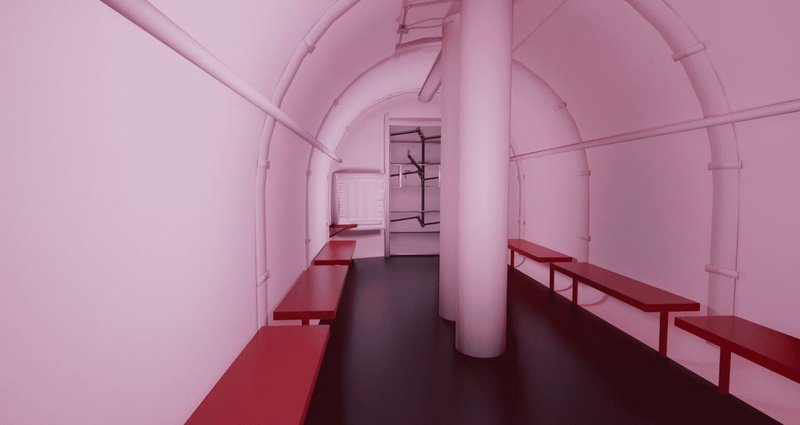
Red Dog shelters include climate control systems, seating, emergency lighting, 128 dB siren alerts, and 110V/220V power connectivity. That makes them functional as:
- Crew break and cooling stations during high-heat operations
- Muster points for site emergencies beyond weather events
- Faraday cage protection during nearby lightning activity
- Temporary meeting or coordination space during field operations
When a shelter is used regularly, crews are comfortable with it. When a warning comes in, they move to it without hesitation. That behavioral readiness is difficult to achieve with a shelter that sits locked and unused until the siren goes off.
Data center operators in particular have found this multi-use model effective. The deployment model for tornado pods at data centers demonstrates how rapid-deployment shelter placement supports both uptime and personnel protection without requiring major site work.
Take the Next Step
Mission-critical facilities safety planning requires more than a weather alert system and a posted evacuation map. It requires certified protection that can be deployed quickly, placed where workers actually are, and scaled as the facility changes.
Red Dog Shelters works with data center operators, energy companies, construction managers, and industrial facility teams to evaluate placement, capacity, and deployment logistics based on actual site conditions.
Contact Red Dog Shelters to discuss shelter options for your facility.