
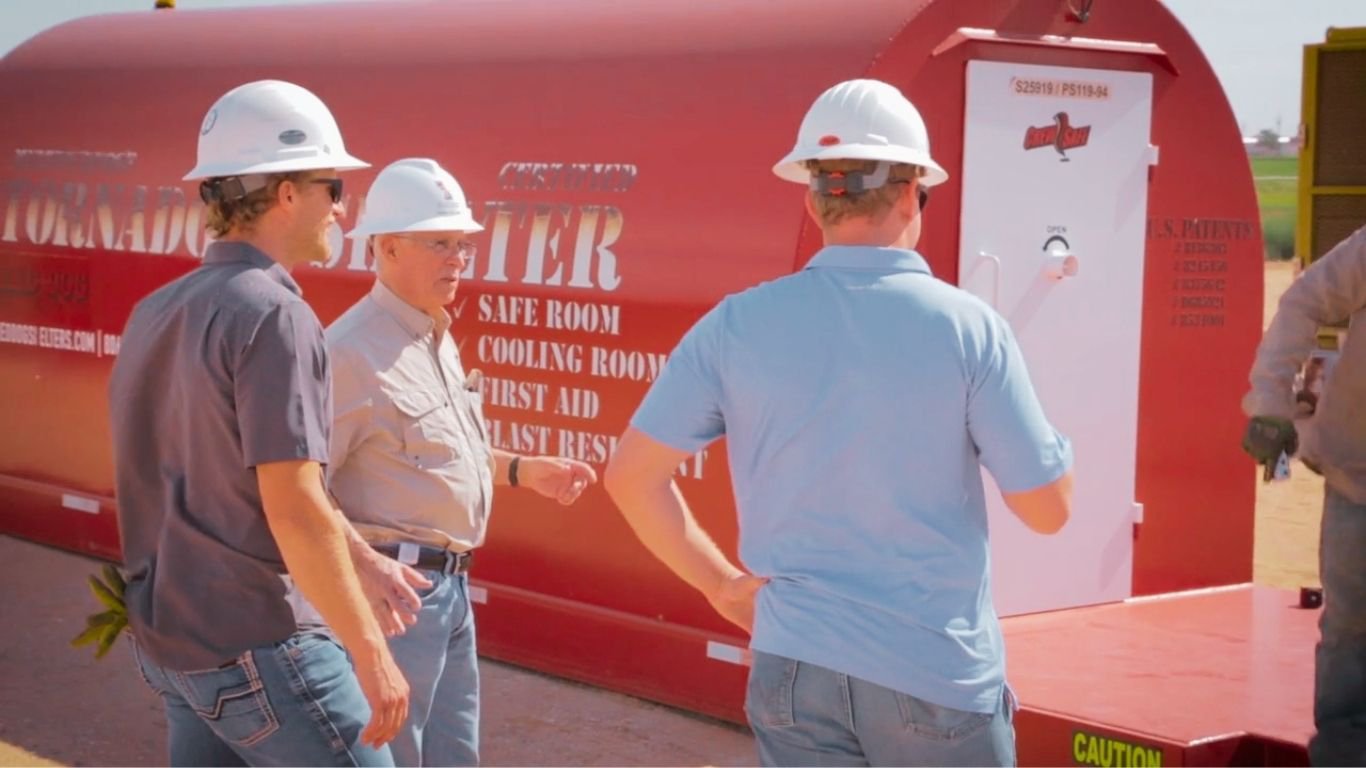
A single storm warning can stall an entire job site for hours, not minutes. Few site leaders track how closely construction productivity and weather trends move together each season. Crews lose real hours every time a warning pulls them off the tools.
Most crews assume a storm means the whole site shuts down for the day. A faster option exists once shelters sit close enough for workers to reach quickly. Here's how that simple choice keeps your project schedule far closer to the original plan.
The Real Numbers Behind Construction Productivity and Weather Delays
Weather disruptions cost you far more time than a single afternoon of light rain. Full evacuations pull every crew off the site, often for an entire shift. On-site shelters cut that loss down to the length of the actual warning.
Bad weather does more damage to a job site than most budgets assume. A recent engineering study found that adverse weather delays roughly 45% of construction projects worldwide. So anyone who plans a budget around a fixed schedule should take that number seriously.
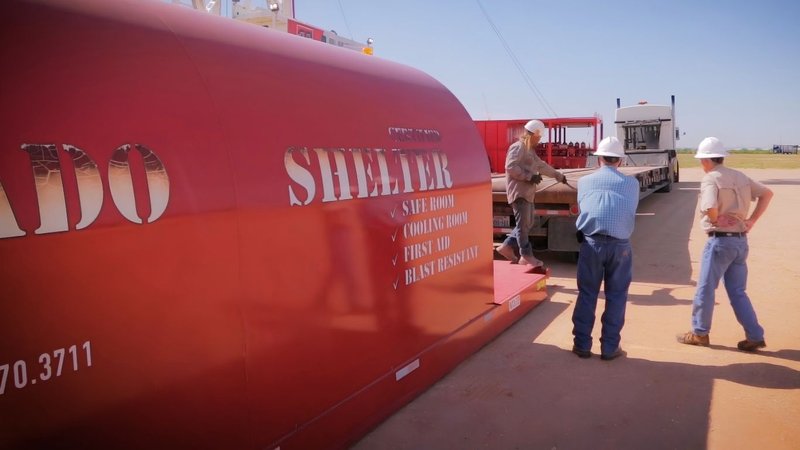
Rain, wind, and extreme heat each slow work down in their own particular way. Even a little rain can also slow labor output more than most crews expect. You can see the tight link between construction productivity and weather risk on any site. Cranes, lifts, and scaffolds all carry strict wind-speed limits set by their manufacturers. Our earlier post on project delay prevention covers those wind limits in more depth.
Temperature swings matter too, especially during long, hot summer or freezing winter work shifts. As a result, heat stress alone can force slower paces or extra breaks. Still, none of these swings show up in a standard project timeline until they hit.
Why Full-Site Evacuations Cost You More Than a Storm Warning
Most site plans still treat every storm warning the same way, full stop. A warning means the whole crew stops, gathers gear, and heads off site. Getting everyone off site alone can eat more time than the storm itself.
How NSSA and FEMA P-361 Standards Prove Shelter Reliability
Most site plans still treat every storm warning the same way, full stop. A warning means the whole crew stops, gathers gear, and heads off site. Shelters built to Federal Emergency Management Agency (FEMA) P-361 and National Storm Shelter Association (NSSA) standards go through independent testing, and the two work together rather than in competition, as the table below shows.
| Federal Emergency Management Agency (FEMA) P-361 Standards | National Storm Shelter Association (NSSA) Standards | |
|---|---|---|
| What Is It? | A federal guidance document outlining design criteria for storm shelters | An industry association that verifies shelters actually meet those criteria |
| Role | Sets the performance bar, functioning as a reference rather than an enforceable rule on its own | Confirms compliance through independent, third-party engineering evaluation |
| Wind and Debris Criteria | Requires shelters to withstand 250 mph winds and a 15-pound 2×4 missile fired at 100 mph, everywhere | Certifies designs against the ICC 500 standard it helped write, with ratings from 130 to 250 mph based on regional risk |
| How Compliance is Confirmed | Provides the blueprint but does not test or certify shelters directly | Requires an NSSA-approved third-party engineering firm to sign off before a manufacturer earns the NSSA seal |
So independent testing proves a unit can protect you without making you leave the site. Storm warnings for a job site usually run about 20 to 45 minutes, and shelter-in-place units placed near the work let crews wait out that window in place. The link between construction productivity and weather safety shows up fastest at this exact moment.
Crews return to work within minutes once the warning clears, not hours later. Our post on storm shelter deployment explains how fast crews resume normal work. Full evacuations also carry hidden costs well beyond the lost labor hours alone, since restart time, re-mobilizing crews, and repeat safety checks all add up fast on a busy schedule, and a shorter shelter-in-place window keeps your whole crew closer to schedule.
How Distributed Shelters Support Construction Productivity and Weather Response
Spreading shelters across a large site cuts response time for every single crew. You place units near the actual work, not just near a main office. Good placement ties construction productivity and weather protection together instead of pulling them apart.
- Each unit needs no mechanical anchoring, since roof vacuum tubes create a downward pressure differential.
- You can add units as headcount grows and remove them as work winds down.
- Units fit well on tight construction sites, spread out for faster access when storms build.
- You can move a shelter yourself, or our winch truck repositions it for you.
- Each shelter also works as a lightning-safe Faraday cage or an emergency muster point.
Flexibility like this matters most on large, fast-moving construction sites with shifting headcounts. So site managers stay ready no matter what the crew size looks like that week.
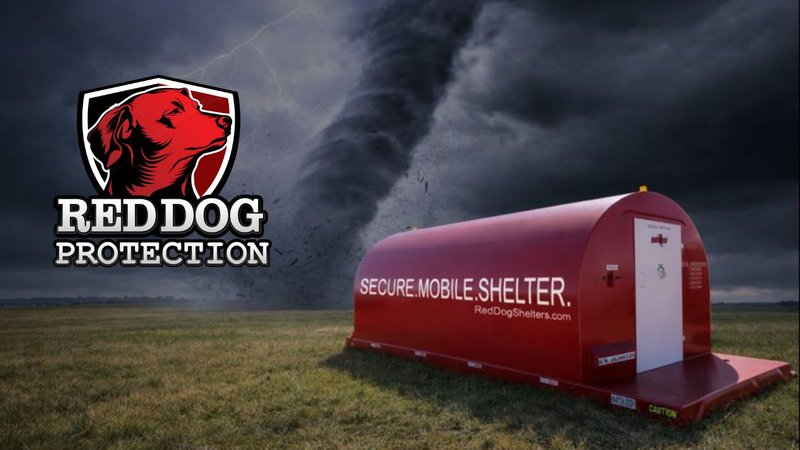
Our guide on shelter sizing explains exactly how many units your project needs. From there, a storm warning turns into a short pause instead of a lost day. Your project timeline stays intact, and your crew stays safe at the same time.
Protect Your Schedule Before the Next Storm Warning
Weather delays hit fast, but your response speed decides how much they cost you. Distributed, on-site shelters keep crews safe without stopping the whole job for hours. Pricing depends on your project length and how many units you need on-site.
Our team walks you through unit counts, placement, and lease terms for your site. You get a plan built around your actual schedule, not a generic package. Reach out to our team today and keep your next storm warning from costing you a full day.