

Modular data center construction moves fast by design. Prefabricated server rooms, containerized cooling systems, and standardized power modules are assembled on-site or shipped ready to deploy. The entire model depends on speed, flexibility, and minimal ground disturbance. Yet when it comes to storm safety, most projects still rely on approaches that were never designed for modular construction timelines.
Traditional shelter solutions conflict with the very principles that make modular builds work. Pre-fabricated safety units solve that conflict, and for modular data center projects specifically, the operational fit is strong.
Why Traditional Shelters Don't Work for Modular Data Center Construction
Underground storm shelters are the most commonly referenced alternative, but they create significant problems on active modular construction sites.
Excavation requires:
- Ground surveys and soil assessments before breaking ground
- Careful coordination with existing electrical conduit, fiber runs, and cooling lines
- Concrete pours with cure times that extend the critical path
- Permanent placement that cannot adapt to shifting site layouts
Modular data center construction phases often compress timelines to weeks, not months. A shelter that needs weeks of site preparation before becoming functional is simply not a real option for a project in active deployment.
Terrain is another factor. Many data center campuses are developed in areas selected for land availability and grid proximity, not ideal soil conditions. Above-ground storm shelters designed for rocky or difficult terrain solve a problem that underground options cannot address at all.
How Pre-Fabricated Units Fit the Modular Build Model
A pre-fabricated safety unit arrives fully built. It requires no foundation work, no mechanical anchoring, and no site modification beyond a reasonably level surface.
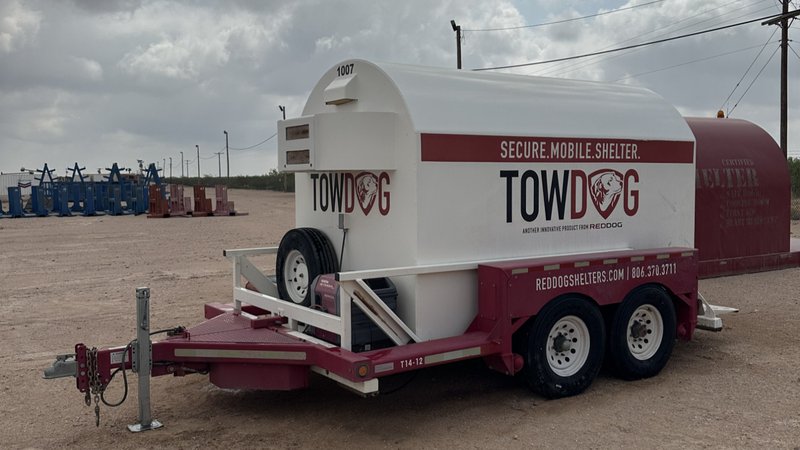
For modular data center construction, this creates several concrete advantages:
- Deployment happens in parallel with the build. The shelter can be placed the same week crews arrive on-site, not after the facility is operational.
- Units can move as construction phases shift. As the project footprint evolves, shelter placement can evolve with it.
- No excavation means no interference with underground utilities, fiber infrastructure, or drainage systems.
- The shelter scales with headcount. As construction crews expand into commissioning teams, additional units can be added and later removed as the project winds down.
This flexibility directly matches the modular construction model. Both the facility and its safety infrastructure can adapt without triggering a new round of permitting or site engineering.
Severe Weather Response Depends on Proximity
Data center construction projects draw large, rotating workforces: electricians, mechanical contractors, fiber installation crews, and equipment commissioning teams. These personnel work across a site that may span hundreds of thousands of square feet.
When a tornado warning issues, workers may have only minutes to reach shelter. If the only option sits at the far edge of the site, crews in outlying areas face a genuine risk. Distributing pre-fabricated units across the site ensures no crew is more than a short walk from protection.
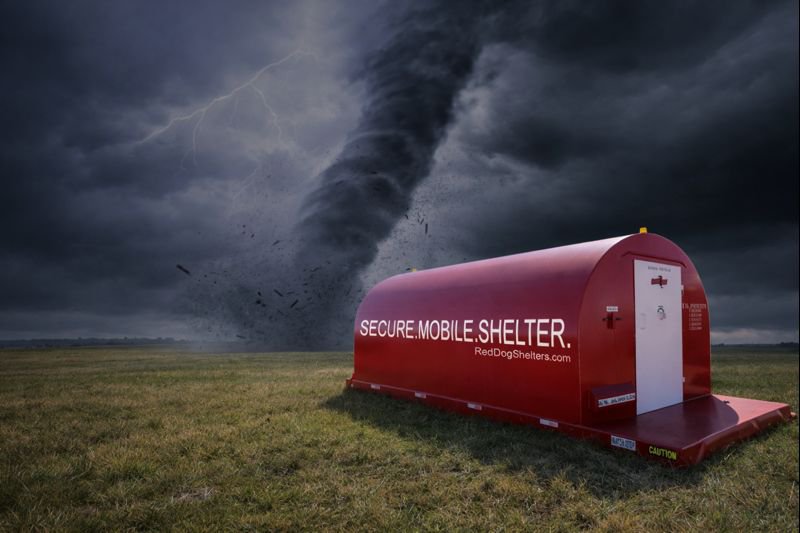
This is not a minor logistical point. Response time is a core variable in severe weather safety planning, and shelter placement directly determines it. Red Dog's commercial storm shelters hold 32 occupants across 288 square feet of interior space, so distributed deployment is practical even at large-scale sites.
Certification and Compliance for Modular Construction Sites
Pre-fabricated safety units are not a trade-off against performance. Purpose-built above-ground shelters can meet the same compliance standards required by OSHA and EHS frameworks, provided they carry proper third-party certification.
Red Dog Shelters units are individually certified to meet or exceed:
- FEMA 361 and 320 guidelines for safe room design
- ICC 500 standards for storm shelter construction
- NSSA (National Storm Shelter Association) performance requirements
Third-party engineers stamp each unit individually. For safety directors managing compliance on a large modular construction site, that certification trail matters when documentation requirements arise.
Beyond tornado protection, these shelters also function as Faraday cages during lightning events, and muster locations for crews to get on-site protection at a moment’s notice. That dual-use capability adds meaningful value on large, exposed construction sites. The engineering behind above-ground blast and storm shelters makes them more than a single-use asset for the duration of the build.
Treating Storm Safety as Part of the Modular Data Center Build Plan
The strongest argument for pre-fabricated safety units in modular data center construction is alignment. The modular approach assumes that major building components arrive ready to use, integrate without major site disruption, and can be adjusted as project needs change.
A pre-fabricated safety unit operates on exactly the same logic. It arrives ready, requires no permanent installation, and moves as the project evolves. When the project concludes, it leaves with the rest of the equipment.
For safety directors and project managers working through construction planning, the question is not whether the site needs storm protection. Instead, the real question is whether the shelter solution fits the pace and structure of the project. On modular builds, above-ground pre-fabricated units are the clear answer.
Contact Red Dog Shelters to discuss shelter placement, fleet availability, and leasing options for your modular data center project.