
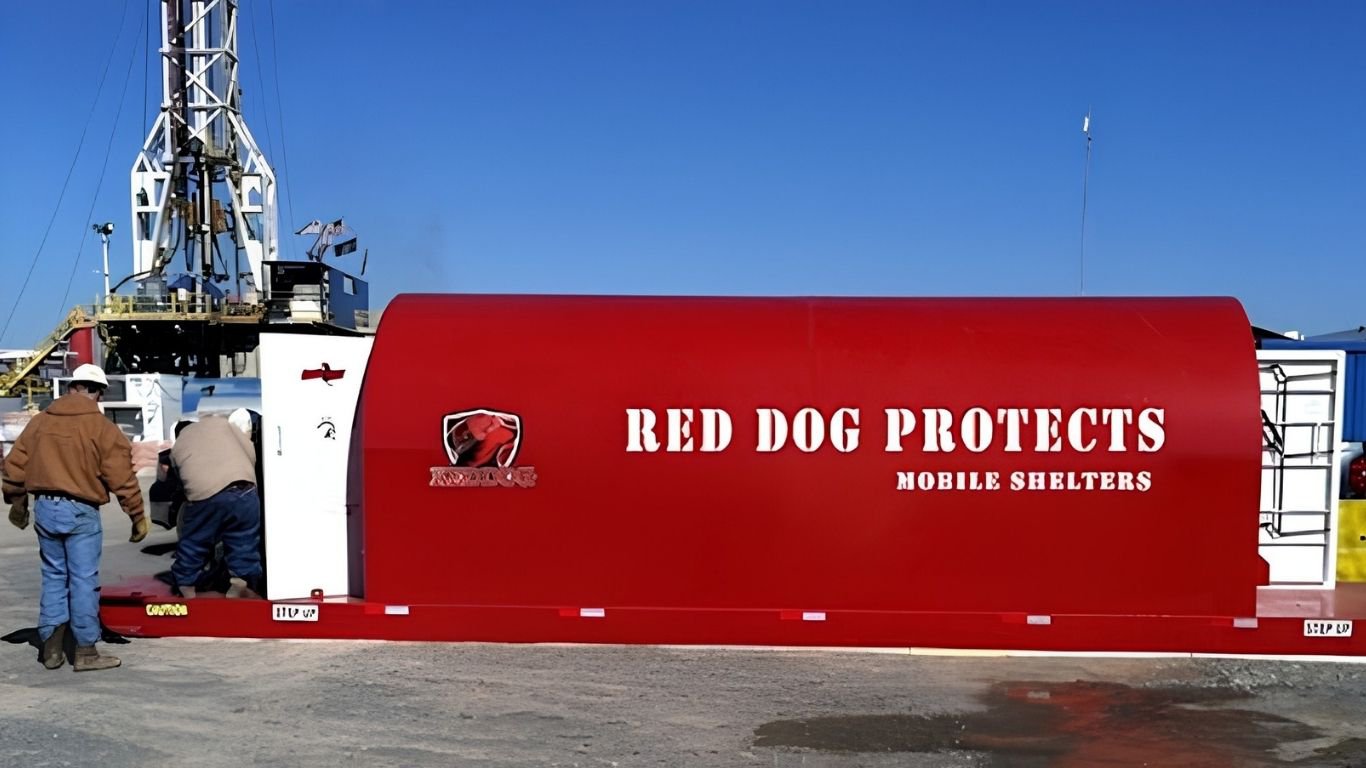
Construction sites rank among the most hazardous work environments in the country. High-density projects amplify that baseline exposure by concentrating large crews in open terrain where infrastructure is incomplete and coverage is often insufficient. For project teams without a community tornado shelter plan tailored to that density, severe weather represents a risk that most site safety plans address too late. They also address it too simply.
Getting that plan right requires more than ordering a certified unit and placing it near the site entrance. It requires matching capacity to crew density, distributing units across the footprint, and building in flexibility to move them as zones shift. In short, on a high-density site, those three requirements separate a shelter plan from a shelter placement.
What High-Density Construction Zones Demand From a Shelter Plan
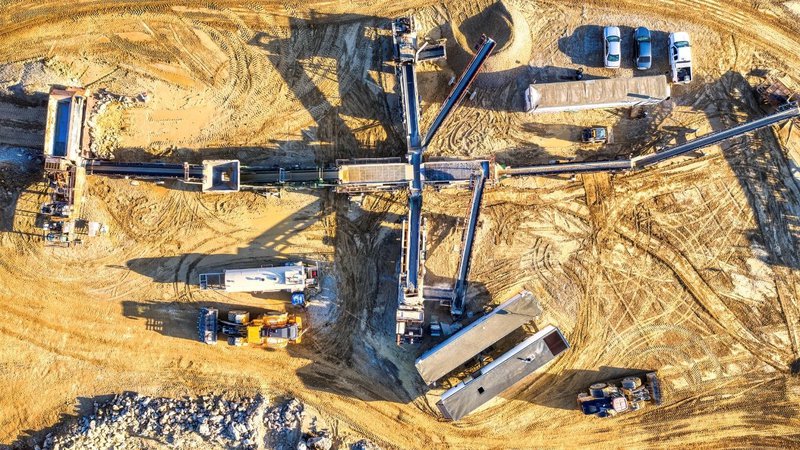
High-density construction zones present a specific design challenge. According to the Bureau of Labor Statistics, construction and extraction workers experienced 1,032 fatalities in 2024 alone. A commercial build or highway interchange may concentrate 80 to 150 workers in a compressed footprint during peak phases. However, those workers operate across multiple construction trades and zones simultaneously. Each zone needs its own accessible shelter, not a shared unit at the perimeter.
Under ICC 500, a community tornado shelter is any certified shelter serving more than 16 occupants. That definition covers every industrial and commercial shelter deployment. Red Dog Big Dog units hold 32 people per FEMA standards and measure 35 feet by 8.25 feet. That capacity works well for trade-level crew groupings on a large site. A 120-person site at peak capacity needs a minimum of four units spread across the active work zone.
Furthermore, shelter placement should reflect actual crew distribution rather than site geometry. A single unit at the main gate does not cover a crew working 800 feet away. For that reason, safety directors should map shelter positions against crew locations at each project phase. A fixed site plan drawn at project start is not sufficient.
Engineering a Community Tornado Shelter Footprint for High-Density Sites
The core engineering principle behind an effective shelter plan is distribution. Units spread across the site footprint reduce maximum travel distance for every crew member. For instance, on a large site, the goal is to keep every worker within a realistic running distance of a certified shelter.
Red Dog units require no foundation and no mechanical anchoring. The patented Aerodynamic Anchoring system creates a low-pressure zone at the unit base under high wind loads. Two vacuum tubes transfer that pressure downward. As a result, the shelter locks to the ground without bolts or stakes. A trained Red Dog crew sets a unit to operational readiness in as little as five minutes.
In addition, that anchoring design means shelter positions change as the project advances. A unit covering civil works crews in month two moves to cover structural steel crews in month five. No foundation work and no anchor removal are required. Still, customers with the means reposition units themselves. If not, Red Dog dispatches a winch truck to handle the move.
Scaling Shelter Capacity to Crew Density Across Project Phases
High-density construction zones rarely run at peak headcount for the full project duration. Civil works crews mobilize first. Structural, mechanical, and finish trades follow in overlapping phases. That means headcount at any given time depends on which phases are active.
A shelter plan sized for peak headcount wastes resources during low-density phases. In contrast, a Red Dog lease fleet scales with the project. Clients add units as headcount grows during peak phases and return units as individual trades demobilize. That scalability is built into the rental model.
Similarly, when a new subcontractor arrives with 30 additional workers, Red Dog delivers an additional unit within 24 to 48 hours. The shelter plan updates without requiring a full redesign. Regional yard locations in Texas, Louisiana, and Oklahoma support fast delivery across the central U.S.
Multi-Purpose Value Across a High-Density Site
On a large construction site, a community tornado shelter earns its place through daily utility, not just storm response. Red Dog units include dual air conditioners and heaters. In summer heat, that makes each unit a functioning cool-down station for crews managing heat stress. In winter, units serve as warming rooms for crews working through cold weather phases.
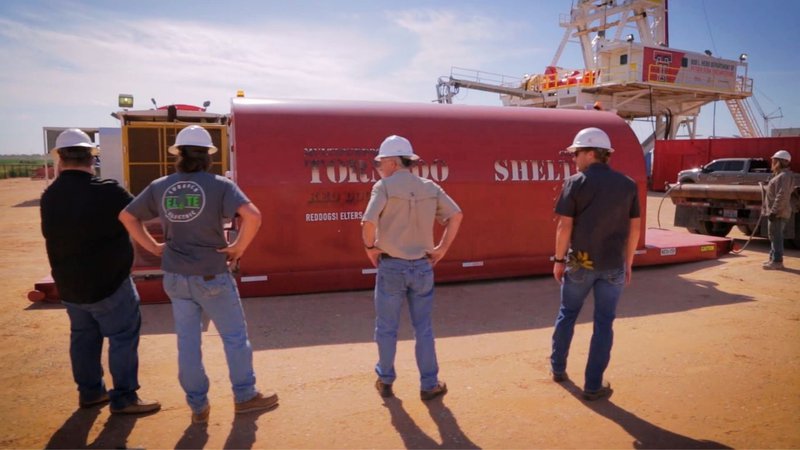
Moreover, each unit acts as a Faraday cage when grounded. That protects workers from high-voltage electrical charges during lightning events. On a high-density site running significant electrical infrastructure, this adds protection every day, not just during tornado warnings.
By contrast, a fixed safe room at one end of the site serves the trade working nearby. It does not follow the crew as phases advance. It cannot serve as a cooling station, warming room, or Faraday cage across the broader footprint.
Designing Your Community Tornado Shelter Fleet for Audit Readiness
A community tornado shelter plan for a high-density zone must also be audit-ready. Safety directors, project owners, and general contractors face documentation requirements from insurers, regulatory bodies, and owner representatives. Each unit in the fleet needs an individual FEMA P-361 certification from a licensed structural engineer.
Red Dog engineers stamp and certify each unit individually against FEMA P-361, FEMA P-320, ICC 500-2008, and NSSA standards. Therefore, safety directors can document the full fleet certification status at any point in the project lifecycle. Even so, the value of individual certification extends beyond regulatory compliance. As units join and leave the fleet, each carries its own certification record. That model matches how high-density sites actually operate. Units come and go across project phases rather than sitting in a fixed configuration from day one.
Ultimately, the strongest community tornado shelter plan moves with the project. It scales with the crew and documents protection at every phase. Red Dog shelters are FEMA-rated, individually certified, and built for exactly this deployment model. If your high-density project does not yet have a shelter plan that meets all three criteria, schedule a delivery to learn more or get started.