
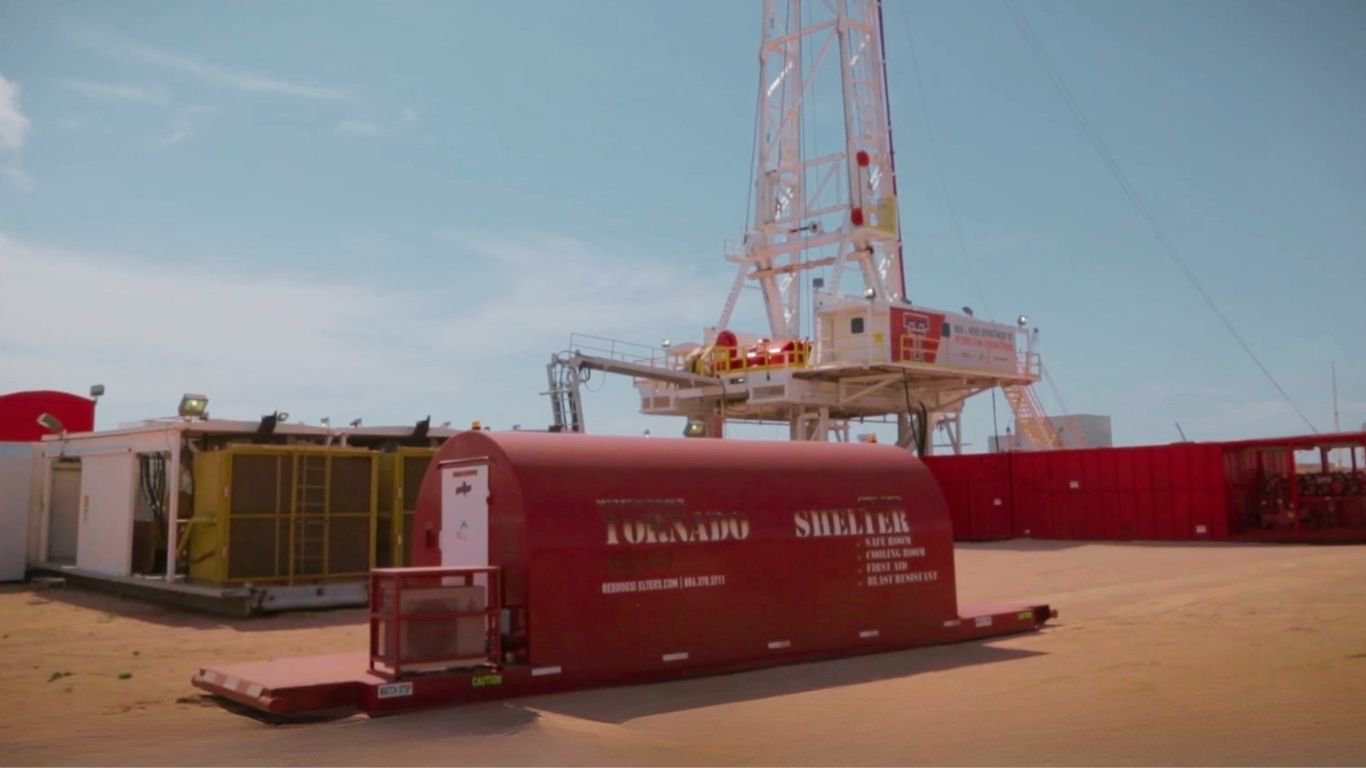
Short-term industrial projects carry the same severe weather exposure as long-term ones. A 90-day pipeline tie-in, a seasonal solar farm installation, or a six-month construction push all run through weather windows that ignore project timelines. Safety directors who build shelter plans only for permanent operations leave a documented gap in their short-term project coverage.
Yet short-term projects often go without certified mobile storm protection for a practical reason. Safety directors assume that a two-month project does not justify the logistics of deploying, managing, and returning a shelter fleet. As a result, crews shelter in job trailers that provide no certified protection when severe weather arrives.
Why the Project Timeline Does Not Change the Exposure
Under the OSHA General Duty Clause, employers must provide a workplace free from recognized hazards likely to cause death or serious physical harm. Severe weather is a recognized hazard. A tornado does not distinguish between a 24-month infrastructure build and a 60-day field project.
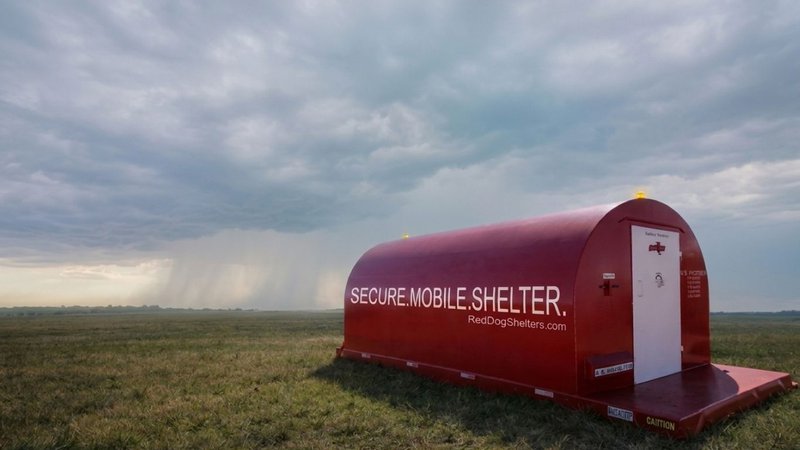
For that reason, the shelter standard for a short-term project matches the standard for a long-term one. How you structure the shelter solution differs. Whether you need one does not. A mobile storm protection plan built around a lease model scales to any project duration. It deploys when the crew mobilizes and returns when the work is done.
Furthermore, the cost argument weakens when viewed through the lens of a rental. A Red Dog Big Dog unit leased for 60 days carries none of the capital cost or storage burden of permanent shelter ownership. The investment scales to the project timeline, not to a fixed asset commitment.
How the Lease Model Supports Agile Project Safety Planning
Red Dog built its rental model specifically for the project profile that short-term operators face. Units deploy within 24 to 48 hours of an order from yard locations in Moore, OK, Minden, LA, and Lubbock, TX. Trained Red Dog drivers deliver and unload using a winch truck. Receiving crews need no equipment and no site preparation.
Each unit uses a patented aerodynamic anchoring system. There is no foundation to pour and no mechanical anchoring to install. A trained Red Dog crew places a unit on flat ground, and it is ready in as little as five minutes. In contrast, a shelter requiring foundation work may take days to set up. For a 60-day project, that setup time represents a significant share of the total schedule.
Similarly, returning a unit at project close is a straightforward pickup. Red Dog dispatches a winch truck, loads the unit, and the site has no remediation obligations. That clean entry and exit model makes mobile storm protection practical for short-duration work.
Sizing and Positioning for Short-Term Site Conditions
Short-term projects often have simpler site footprints than large multi-phase builds. A seasonal road crew may work a single 10-acre corridor. A tie-in project may have 20 workers in two zones. However, those conditions still require FEMA-rated protection, typically one or two units rather than a distributed fleet.
Red Dog Big Dog units hold 32 people per FEMA standards and measure 35 feet by 8.25 feet. For a 20-person crew working in two zones, one centrally positioned unit covers the full headcount with capacity to spare. For a larger crew spread across a wider footprint, two units at opposing ends of the active zone give every worker a realistic path to cover.
In addition, units shift as the active work zone advances. Because crews skip mechanical anchoring entirely, repositioning takes minutes without disrupting the project schedule. That flexibility is especially valuable on short-term projects where the work zone advances quickly.
Mobile Storm Protection as a Multi-Purpose Safety Asset
Even on a short-term project, a FEMA-rated shelter does more than protect crews from tornadoes. Red Dog units include dual air conditioners and heaters. On a summer road project, that makes each unit a functional cool-down station for crews rotating through heat rest cycles. On a winter tie-in project, it also serves as a warming room between outdoor work shifts.
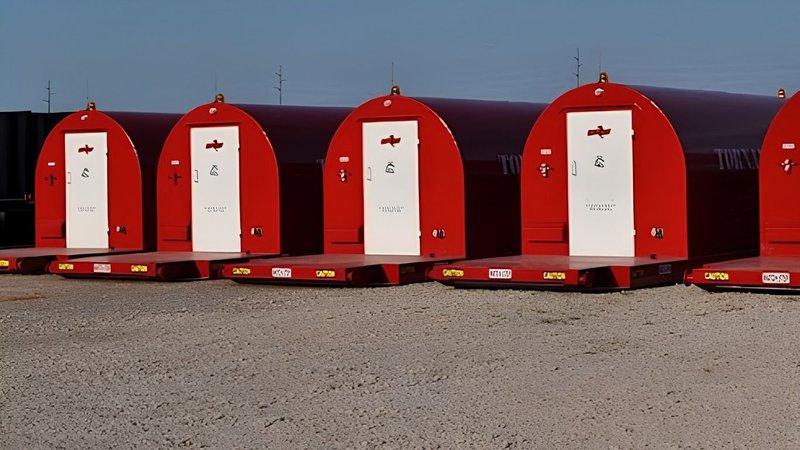
Moreover, each unit acts as a Faraday cage when grounded. That protects crew members from high-voltage electrical charges during lightning events. For short-term electrical infrastructure projects or work near transmission infrastructure, that adds daily protection well beyond storm season.
By contrast, a job trailer provides none of this. It does not provide FEMA-rated protection, blast resistance, or documented compliance. For project managers demonstrating due diligence on short-term work, that gap is a liability that the lease model closes at a proportional cost.
Building Mobile Storm Protection Into the Project Safety Plan From Day One
The most effective approach treats shelter deployment as a first-order planning input. It belongs alongside temporary power, site access, and crew mobilization on construction projects, not after the first weather event raises the question. That means ordering units when the site plan comes together and positioning them before the crew arrives.
Still, project timelines compress quickly, and shelter planning often comes last. Red Dog's 24-to-48-hour delivery window supports late-stage deployment when the schedule allows no other option. Even so, the strongest coverage comes from deploying before the crew arrives rather than after.
Ultimately, the agility of a mobile storm protection plan shows in how seamlessly it integrates into the project from the start. Speed of emergency deployment matters less than depth of planning.
Red Dog units are FEMA-rated, individually certified, and ready for short-term deployment. If your current project plan does not yet include certified mobile storm protection, contact us to learn more or get started.