
First responders arriving at a disaster staging area don't have the luxury of waiting for permanent infrastructure. They set up in parking lots, open fields, and highway shoulders. Their command post is whatever they brought with them. In that environment, mobile shelters aren't a comfort measure. They're a certified operational asset that protects personnel, supports command functions, and keeps crews working through the duration of a response.
Yet most emergency management plans treat shelter as a passive element. As a result, first responder teams often arrive on scene with no certified protection from the next weather event that follows the first.
Why Disaster Response Environments Demand Certified Mobile Shelters
Disaster staging areas share one defining characteristic with remote industrial job sites. Both lack permanent infrastructure. A tornado response, a flood recovery, or a wildfire suppression camp all share one thing. Crews work for days or weeks with no fixed shelter available.
In contrast to a permanent facility, a staging area is built from whatever resources arrive first. That means the shelter solution has to be deployable, certified, and capable of serving multiple roles simultaneously. A job trailer or tent provides neither FEMA-rated protection nor the blast resistance that some response environments demand.
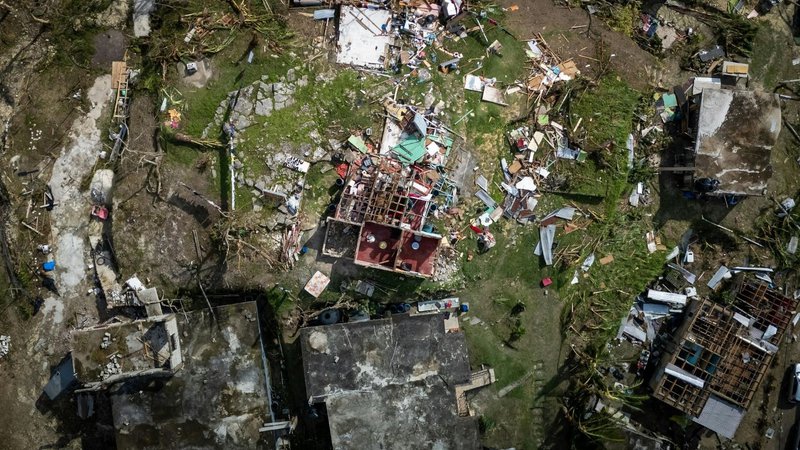
Furthermore, first responder teams often face a compounding problem. The disaster event itself may have destroyed or compromised nearby structures. In short, there is no building to shelter in. The shelter has to come with the response team.
How Mobile Shelters Support the Incident Command Structure
The National Incident Management System defines the Incident Command System as the standard framework for managing all disaster response operations. Within that structure, the Facilities Unit sets up and maintains the Incident Command Post, the Incident Base, and all support facilities for responders. Mobile shelters fit directly into that function.
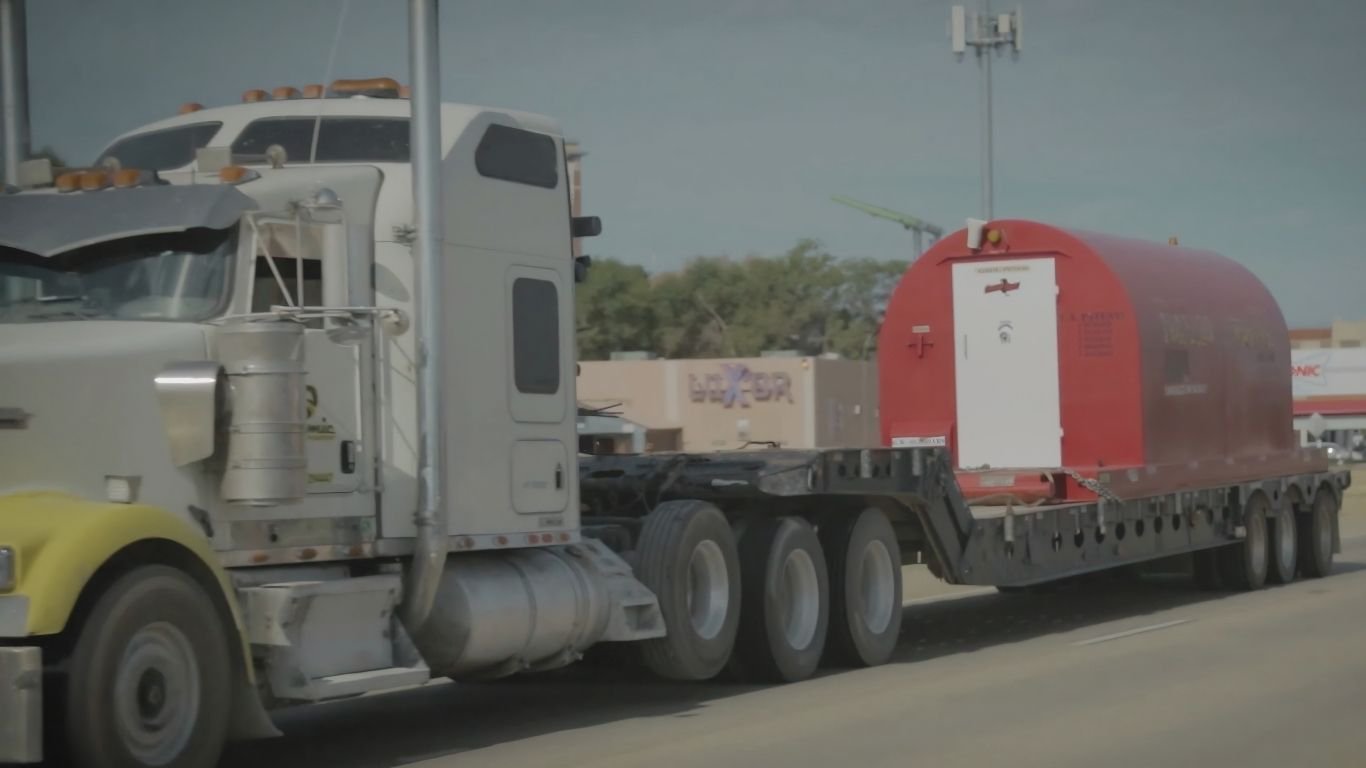
A Red Dog Big Dog unit holds 32 people per FEMA standards and measures 35 feet by 8.25 feet. For example, each unit includes dual air conditioners, heaters, a desk, bench seating, emergency lighting, and a 128-decibel warning siren. That makes it functional as a command post, a crew rest facility, a briefing room, and a certified storm shelter in the same footprint.
Instead of dedicating separate assets to each function, a coordinated fleet of Red Dog mobile shelters covers the full operational support picture. Moreover, each unit acts as a Faraday cage when grounded. That eliminates high-voltage electrical charges during lightning events, a real risk at outdoor staging areas during active storm systems.
Certified Protection for Responders Who Stay When Others Leave
First responders and emergency management personnel operate under a different risk profile than the general public. When a tornado warning fires during an active disaster response, the public evacuates or shelters in place. By contrast, first responders stay on scene and keep working. That means their shelter has to meet the highest available protection standard.
Red Dog shelters meet and exceed FEMA P-361, FEMA P-320, ICC 500-2008, and NSSA standards. The Texas Tech Wind Science and Engineering Research Center tested each design against the highest safe room rating available. Also, Red Dog engineers stamp and certify each unit individually. However, certification is only part of the value. That individual documentation also supports after-action reporting, liability management, and compliance with OSHA General Duty Clause obligations for employer-provided protection from recognized hazards at government and public safety sites.
Rapid Deployment to Match the Speed of Disaster Response
Disaster response doesn't wait for a delivery schedule. A tornado outbreak moves through a region in hours. A flood staging area needs to stand up overnight. That is why Red Dog's delivery model is built around speed.
Units reach active sites within 24 to 48 hours from yard locations in Moore, OK, Minden, LA, and Lubbock, TX. In addition, Red Dog delivers via semi and flatbed winch truck, with trained drivers who handle loading and unloading. Receiving teams need no additional equipment. Still, the most important speed advantage is setup time. A trained Red Dog crew places a unit and it is operational in as little as five minutes.
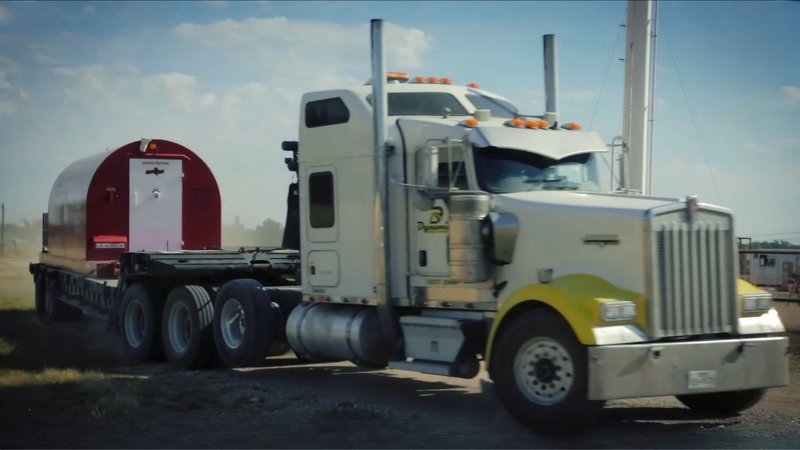
The patented Aerodynamic Anchoring system makes that possible. The curved roof creates a low-pressure zone at the base under high wind loads. Together, two vacuum tubes transfer that pressure downward. As a result, the unit locks to the ground without bolts or stakes. No foundation work, no mechanical anchoring, no gap between placement and protection.
Scalable Fleet Deployment Across Large Response Footprints
A large-scale disaster response may involve hundreds of personnel spread across a staging area covering multiple acres. Similarly, as an incident expands, the staging area may grow or shift. Red Dog mobile shelters scale with both conditions.
Clients add units as crew headcount grows and reduce the fleet as the response winds down. Because crews skip mechanical anchoring entirely, repositioning takes minutes. Units spread across the footprint give every responder a fast path to certified shelter. Even so, each unit is secure as soon as it touches flat ground, with no setup required beyond placement.
For agencies running multi-day or multi-week operations, the lease model eliminates the capital outlay. It also removes the storage burden of owning permanent shelter assets. In practice, therefore, agencies deploy a fleet for the duration of the response and return units when the mission concludes.
Ultimately, the right mobile shelters for disaster response don't just provide a safe place to wait out the next storm. They keep first responders operational, support command operations on active scenes, and document the protection provided to every person on site.
Red Dog units are FEMA-rated, individually certified, and deployable within 24 to 48 hours. If your agency's response plan doesn't yet include certified mobile shelter coverage, talk to our team to learn more or arrange delivery.