
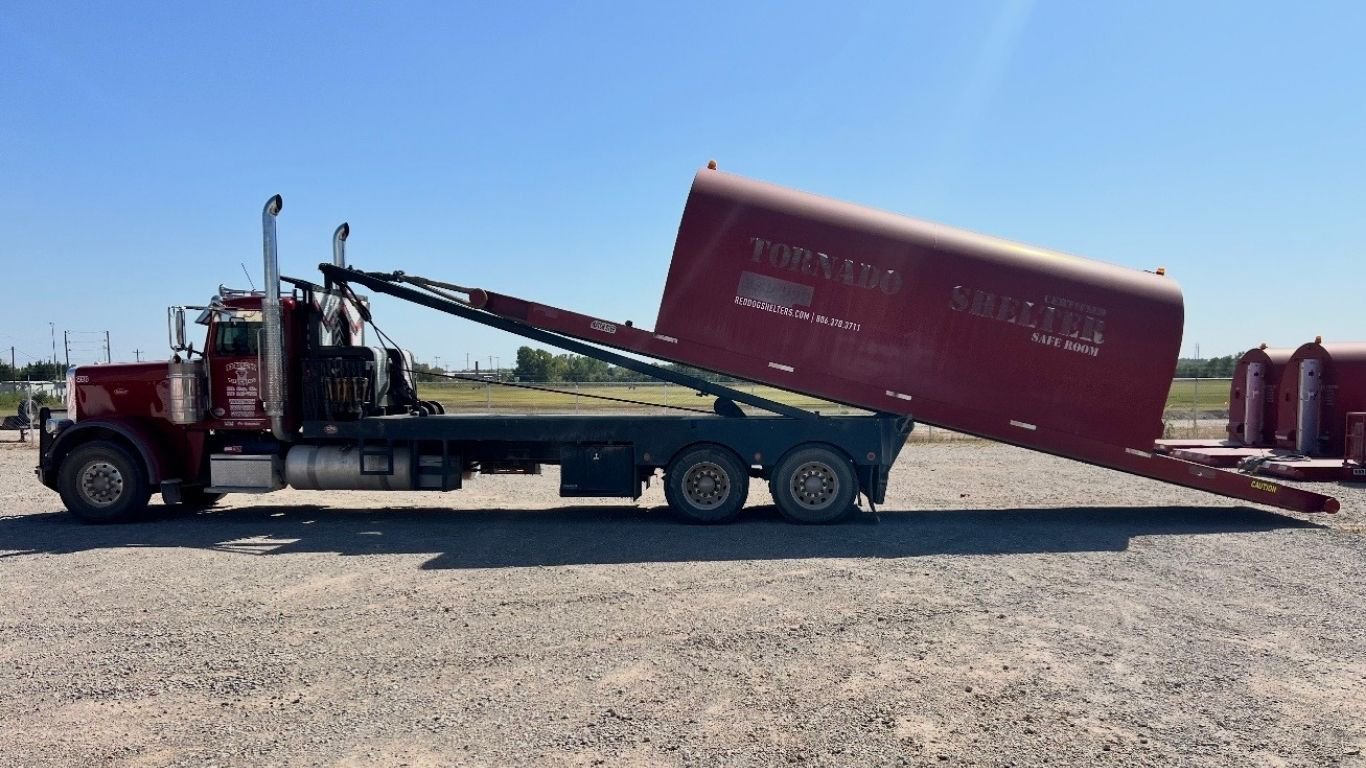
Picture a pipeline construction project in Louisiana with 80 workers spread across a 12-mile right-of-way corridor. Severe weather season runs from April through October. The project superintendent has identified three shelter positions along the corridor, each covering a different crew segment. The question is not whether to deploy community storm shelters. It is how to position them correctly and keep them accessible as crews advance. It is also how to scale the fleet when a second contractor brings 40 more workers on site in month four.
That logistical challenge is where most industrial shelter deployments either succeed or break down. Certification is a necessary starting point, yet logistics is where the plan actually gets tested.
What Makes a Shelter a Community Storm Shelter Under ICC 500
Under ICC 500, any shelter not serving dwelling unit occupants is a community storm shelter. Any unit with an occupant capacity above 16 meets that classification. It does not matter whether the shelter serves the general public or a specific industrial workforce.
For that reason, that classification determines the applicable design, certification, and documentation requirements. ICC 500 requires peer review for community storm shelters protecting 50 or more occupants. Ventilation area standards scale to occupancy. Fire safety requirements apply to shelters integrated into host structures.
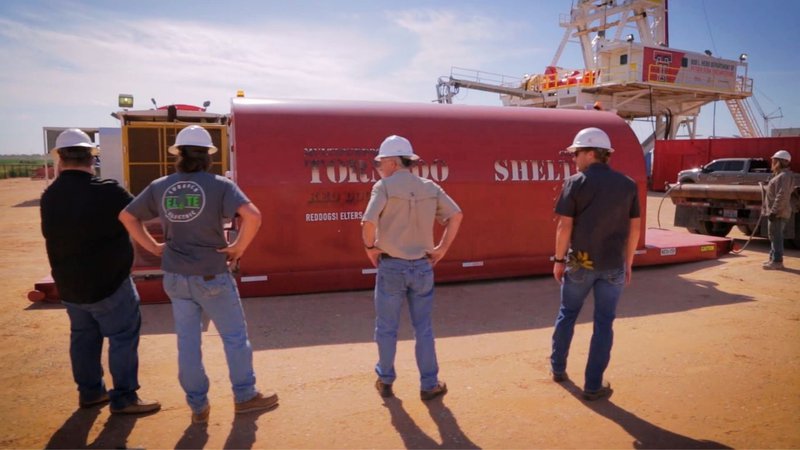
Red Dog Big Dog units hold 32 people per FEMA standards, placing them in the community storm shelter category. Red Dog engineers stamp and certify each unit individually against FEMA P-361, FEMA P-320, ICC 500-2008, and NSSA standards. For safety directors managing documentation for audits or insurance carriers, that individual certification is the record that matters.
The Three Logistical Challenges of Industrial Shelter Deployment
Deploying community storm shelters on an active industrial site involves three overlapping logistical challenges. First, placement: units must reach every crew member within the available warning time. On an active outdoor site, that window is typically two to three minutes. Second, scalability: the fleet must match headcount as the project grows and contracts across phases. Third, repositioning: units must move as work zones shift without creating a coverage gap during the transition.
Each of these challenges has a direct solution in how Red Dog units work.
Solving the Placement Problem With Distributed Deployment
On a large industrial site, centralized shelter coverage creates a gap for crews working at distance. The ICC Building Safety Journal notes that the 2024 IBC introduced a maximum outdoor travel distance of 1,000 feet from any occupied space to a community storm shelter. For active outdoor work environments, that standard reflects a real operational constraint.
Red Dog units require no foundation and no mechanical anchoring. As a result, placement decisions are not limited by ground preparation or permitting. A trained Red Dog crew places a unit on flat ground. It is operational in as little as five minutes. Site managers can position units based on actual crew distribution rather than available anchor points.
Furthermore, units spread across a site footprint give every crew member a realistic path to cover. For the Louisiana corridor example, three units at four-mile intervals give each segment crew a shelter within the accessible window.
Scaling the Fleet as the Project Evolves
Community storm shelters on industrial projects rarely serve a static headcount. Projects ramp up as contractors mobilize, peak during active construction, and wind down as phases complete. A plan sized for month-one headcount leaves the peak workforce underprotected. In contrast, a plan sized for peak headcount carries unnecessary cost during low-density phases.
Red Dog's rental model addresses this directly. Clients add units as headcount grows and return units as work winds down. That keeps the number of community storm shelters aligned with actual crew exposure at every stage. Similarly, when a new contractor mobilizes, Red Dog delivers additional units within 24 to 48 hours from yard locations in Texas, Louisiana, and Oklahoma.
Repositioning Without Downtime
As a project advances, active work zones move. A shelter covering excavation crews in month two may sit two miles from the active zone by month six. However, that gap has a direct solution when shelters use Aerodynamic Anchoring rather than mechanical anchoring.
Because crews skip mechanical anchoring entirely, repositioning does not require foundation work or anchor removal. Customers with the means move units themselves. For customers who need support, Red Dog dispatches a winch truck to active construction sites. Each unit is secure as soon as it touches flat ground at the new position. Therefore, the transition takes hours, not days.
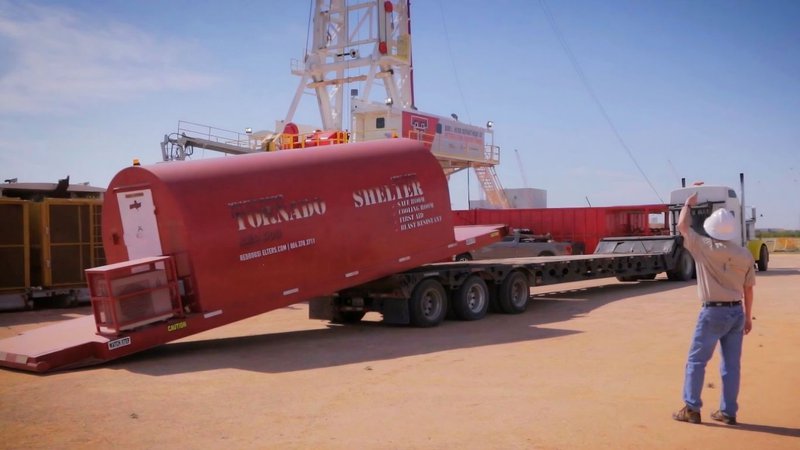
Moreover, repositioning does not affect the unit's certification status. Safety directors maintain a complete and current compliance record throughout the project lifecycle. Ultimately, that is a documentation advantage that fixed or mechanically anchored shelters cannot provide.
Evaluating Community Storm Shelters Before Deployment
Before deploying community storm shelters on an industrial project, safety directors should confirm four things. First, does each unit carry an individual FEMA P-361 certification? Second, does the deployment plan position units to cover the full crew footprint within available warning time? Third, can the fleet scale to match headcount at every project phase? Fourth, can units reposition without downtime or compliance gaps as work zones shift?
In practice, most fixed shelter deployments fail at least one of those tests. In short, Red Dog answers all four. If your project's shelter plan has not addressed all of them yet, start a conversation to learn more or place an order.