
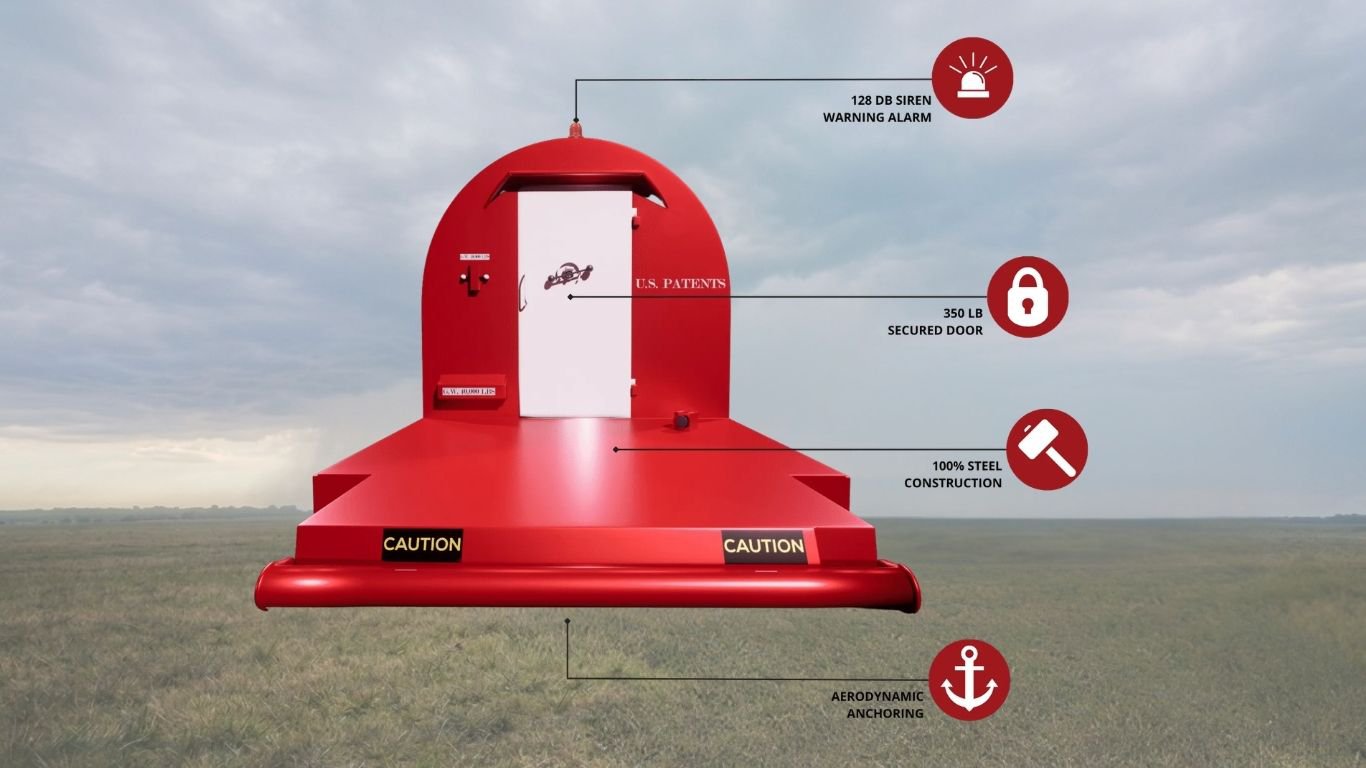
A job site that deploys a mobile shelter only for tornado season is leaving three of its four functions unused. The same unit that protects crews from a tornado can cool them in July and warm them in January. It can also serve as a command hub when the site alarm goes off. Most operations managers don't realize that until they're already on site.
Yet most shelter discussions focus on tornado protection alone. As a result, the broader value of a mobile shelter goes unrecognized. It takes a heat emergency, a lightning storm, or an unplanned site meeting to surface it.
One Mobile Shelter, Four Operational Roles
A mobile shelter earns its place on a job site through daily use, not just storm response. Red Dog Big Dog units measure 35 feet by 8.25 feet and hold up to 32 people per FEMA standards. In addition, each unit includes dual air conditioners, heaters, bench seating, a desk, emergency lighting, and a 128-decibel warning siren. That combination supports four distinct functions on any active industrial site.
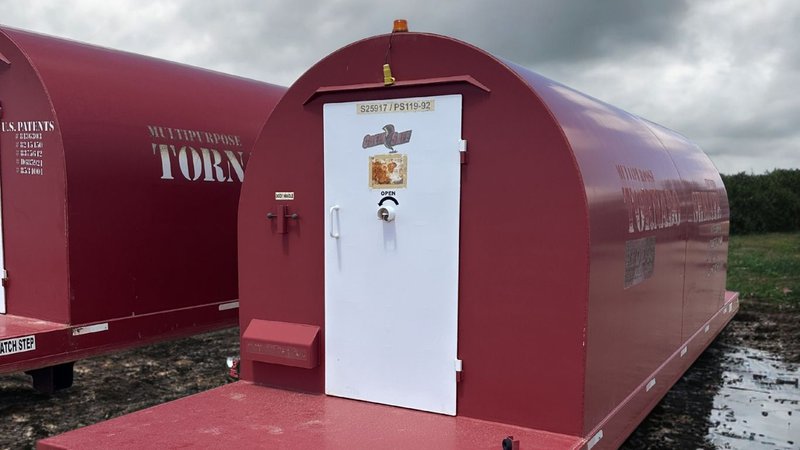
The four roles are severe weather protection, heat stress management, cold weather refuge, and emergency coordination. Together, they make a single Red Dog unit one of the most versatile safety assets a site manager can deploy.
Function One: Severe Weather Shelter
First, and most critically, every Red Dog mobile shelter meets and exceeds FEMA P-361, FEMA P-320, ICC 500-2008, and NSSA standards. The Texas Tech Wind Science and Engineering Research Center tested the design against the highest safe room rating available.
The patented Aerodynamic Anchoring system locks the unit to the ground without bolts, stakes, or foundation work. The harder the wind, the stronger the hold. For that reason, each unit is secure the moment a trained Red Dog crew sets it on flat ground. That takes as little as five minutes.
Because crews skip mechanical anchoring entirely, they spread units across large site footprints. That means faster access when storms develop quickly. Customers move units themselves as project zones shift, or Red Dog dispatches a winch truck to reposition as needed.
Function Two: Heat Stress Management Station
Second, each unit runs dual air conditioning systems, making it an effective cool-down station during extreme heat. The Bureau of Labor Statistics tracked occupational heat deaths from 1992 to 2022. The average came to 34 fatalities per year. That number keeps climbing. For industrial crews working in oil fields, on pipeline routes, or at high-temperature construction sites, that record is a direct planning input.
In practice, a mobile shelter near active work zones gives supervisors a place to rotate crews through rest cycles. That reduces cumulative heat exposure without sending workers off-site. Similarly, access to a climate-controlled space supports faster recovery from early-stage heat stress before symptoms escalate.
Furthermore, OSHA is moving toward a formal heat injury and illness prevention standard. Documented access to cooling stations on active sites strengthens an employer's compliance posture under the existing General Duty Clause.
Function Three: Cold Weather Warming Room
Third, the same units that cool crews in summer serve as warming rooms during winter operations. Each unit includes built-in heating, making it useful across all seasons. For pipeline crews, oil field workers, and utility teams working through winter months, a warm, dry refuge between shifts is a direct safety asset.
In contrast to temporary structures like heated tents or construction trailers, a Red Dog unit provides certified structural protection alongside climate control. That means crews get warmth and storm protection from the same unit. There is no need for a separate shelter during a winter weather event.
Function Four: Emergency Muster Point and Command Hub
Fourth, each Red Dog mobile shelter serves as a designated muster point for general site emergencies. The built-in siren and strobe lights signal crew assembly from a distance. Moreover, the interior layout includes a desk and seating that make it functional as a temporary command hub during an incident response.
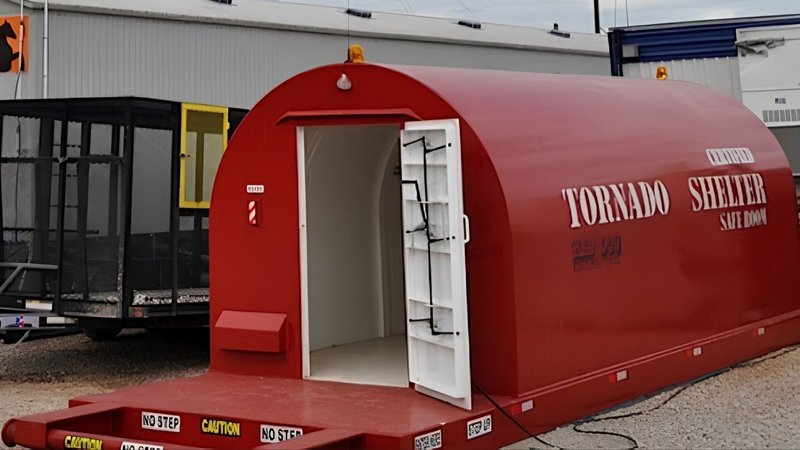
Each unit also acts as a Faraday cage when grounded, eliminating high-voltage electrical charges from the interior during lightning events. For sites running electrical work near substations or transmission lines, that adds a layer of protection a standard job trailer cannot provide.
Getting Maximum Value From a Single Mobile Shelter Deployment
The four-function model works best when shelter placement reflects actual site operations.
- Units near high-headcount zones cover heat and storm protection at once.
- Those near electrical work areas add Faraday protection.
- Units near site entry points function as muster stations.
Because Red Dog shelters need no foundation and no mechanical anchoring, repositioning as project needs change takes minutes. Still, each unit is secure as soon as it touches flat ground. Clients scale their fleet as headcount grows and reduce it as the project winds down. Therefore, a single unit or a coordinated fleet serves every phase of an industrial construction project from start to finish.
Ultimately, the question for site managers is not whether a mobile shelter is worth deploying. It is how many functions it can cover once it is on site.
Red Dog shelters are FEMA-rated, individually certified, and built for daily use across all four functions. If your current site plan only accounts for one of them, reach out to learn more or place an order.