
When a tornado warning sounds on a remote drilling pad or construction site, the difference between a certified FEMA-rated tornado shelter and a standard metal enclosure is not a marketing distinction. It's a structural engineering one. Certification determines whether a unit will hold when a debris field traveling at 100 mph hits the door. That gap matters most when workers have two to three minutes to reach cover.
Yet many site managers choose shelters based on price or lead time alone. As a result, crews end up in structures that look the part but have never been tested.
What FEMA Rating Actually Requires
FEMA P-361 is the federal performance standard for community and residential safe rooms. To meet it, a shelter must survive winds from an EF-5 tornado and withstand debris impacts at 100 mph. For example, a 15-pound 2×4 fired at that speed must not pierce the walls, door, or vents. In short, that's a physical test, not a paperwork review.
The structure must also be verified by qualified structural engineers and impact-tested at a recognized facility. In contrast, standard metal enclosures carry none of these requirements. They may use structural steel and look similar to a certified unit from the outside. However, they've never been tested against debris impact, pressure differentials, or EF-5 loads.
Red Dog engineers stamp and certify each unit individually to meet and exceed FEMA P-361. The Texas Tech Wind Science and Engineering Research Center tested the design and confirmed it meets the highest safe room rating available. You can review the full criteria at the FEMA safe rooms resource page.
What Blast Testing Adds to a Certified Tornado Shelter
In addition to wind and debris testing, the Southwest Research Institute conducted a blast resistance test on a Red Dog unit. Five hundred pounds of explosives detonated 78 feet away. That blast generated an impulsive force of over 2.77 million pounds and produced post-blast winds beyond EF-5 strength. Ultimately, the unit held.
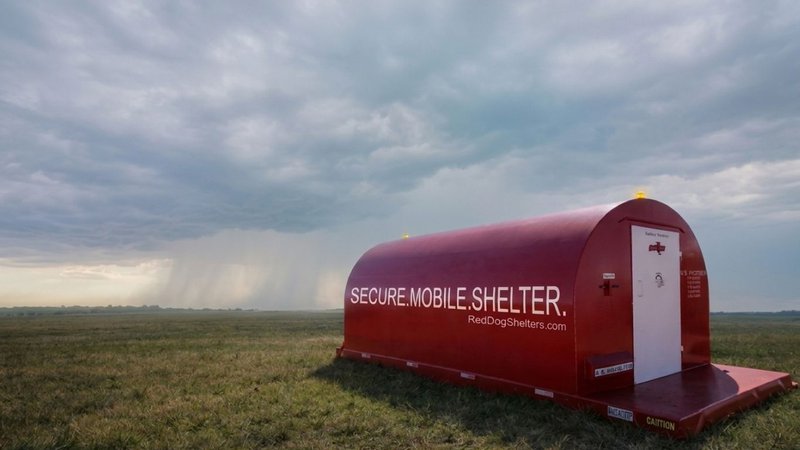
Because of this, Red Dog shelters offer documented blast protection that standard enclosures can't match. For clients in oil and gas near refineries, pipeline corridors, or petrochemical sites, that record is a direct safety asset.
How NSSA and ICC 500 Fit Into the Certification Stack
The National Storm Shelter Association publishes the ICC 500 standard under its NSSA standards framework. That standard sets design and construction rules for both residential and commercial storm shelters. Red Dog meets ICC 500-2008 alongside FEMA P-320, FEMA P-361, OSHA requirements, and ASCE 7-2005.
This stack of certifications serves two purposes. First, it gives EHS leaders documented proof for audits and insurance reviews. Second, it shows that engineers built the shelter to a consistent, verified standard rather than to a price point. Together, these credentials reduce liability exposure for safety directors and project managers.
Why Tornado Shelter Certification Matters More on Remote Sites
On a permanent facility, shelter access follows a predictable pattern. Signage, drills, and corridors guide people to a fixed location. On a remote drilling pad, pipeline right-of-way, or active construction site, conditions shift week to week. For instance, workers may spread across a large footprint. As a result, a single centralized shelter may not be reachable in time.
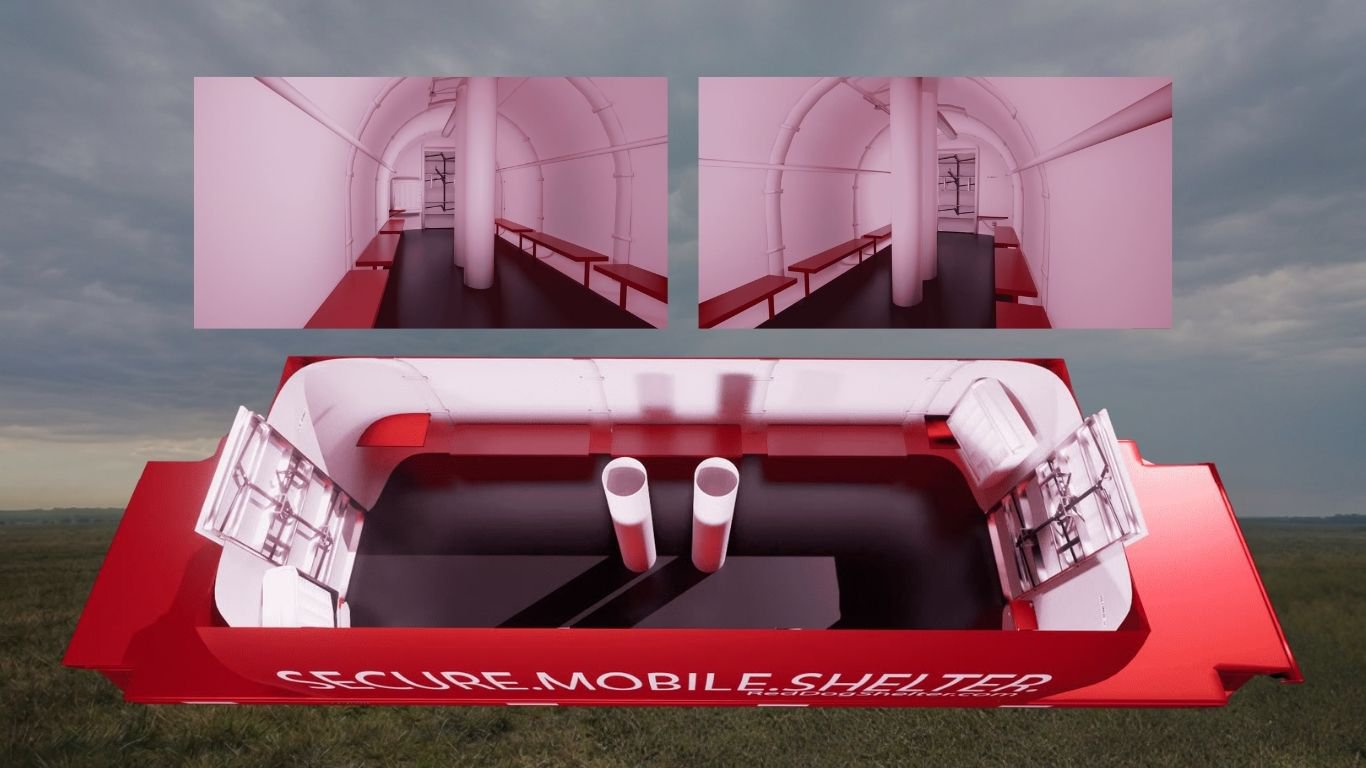
Red Dog's Big Dog units measure 35 feet by 8.25 feet and hold 32 people per FEMA standards. In contrast to fixed solutions, they need no foundation and no mechanical anchoring. That means multiple units can be spread across a large site and moved as the project expands. Moreover, each unit carries its own individual certification. Still, a shelter that fails FEMA P-361 in one corner of a site creates a gap no manager wants to discover after a storm.
Aerodynamic Anchoring and Why It Changes the Certification Equation
Most certified shelters require mechanical anchoring or foundation work before crews can use them. Red Dog units work differently. Instead of bolts or stakes, the curved roof creates a low-pressure zone at the base when wind loads increase. Two vacuum tubes transfer that pressure downward. As a result, the shelter locks to the ground. The harder the wind blows, the tighter the hold.
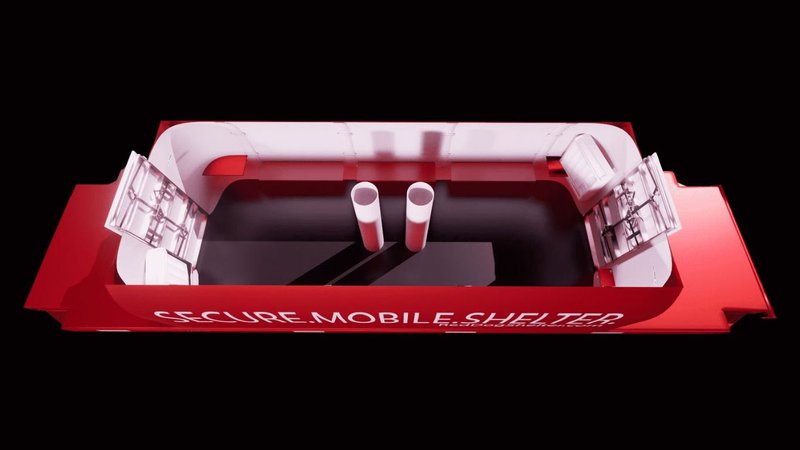
There's no anchoring hardware to install and no concrete to pour. A trained Red Dog crew can have a unit ready in as little as five minutes. For construction sites where terrain or schedule rules out foundation work, that speed is a direct operational advantage.
How a Tornado Shelter Earns Its Value Beyond Storm Season
A certified tornado shelter doesn't sit idle between warnings. Similarly, Red Dog's Big Dog units serve as cooling stations during peak heat, warming rooms in winter, and Faraday cages during lightning storms. They also function as muster points during emergencies and as on-site meeting or training spaces. In addition, clients can scale their fleet up as headcount grows and scale back as jobs wind down. Therefore, the certification investment pays off on every working day, not only during severe weather events.
That's why the right question when evaluating options isn't whether a unit looks sturdy enough. It's whether the unit carries the engineering and testing documentation to back up its appearance. For a FEMA-rated tornado shelter on a remote or industrial storm shelter site, that documentation is the product.
Every unit Red Dog deploys is individually certified to FEMA P-361, blast-tested, and ready in as little as five minutes. If your current shelter can't say the same, it's worth a conversation. Contact us or call (806) 370-3711.