
A 50-megawatt data center build in central Texas sits open to the elements for 18 months before its hardened shell goes up. During that window, the crew managing civil works, structural steel, and mechanical systems has no certified shelter within reach. When a tornado warning fires at 2:00 PM, the only options are the job trailer or a drive off-site. Neither is acceptable.
Progressive teams are starting to account for this gap within their data center infrastructure management plans. Yet most DCIM frameworks focus on power, cooling, and network redundancy inside a finished facility. As a result, the construction phase and the people who build these sites often fall outside the protection plan entirely.
Where Data Center Infrastructure Management Falls Short on Active Build Sites
DCIM, short for data center infrastructure management, covers the tools, processes, and physical systems that support availability and performance. It spans power distribution, cooling, environmental monitoring, and physical security. However, it should also cover the construction and commissioning phases. That is where conditions are least controlled and weather exposure runs highest.
For that reason, EHS leaders on data center builds are expanding how they define infrastructure management. Forward-thinking teams no longer treat crew safety as separate from facility resilience. In short, they build mobile shelter deployment into the site protection plan.
The Severe Weather Gap in Data Center Construction
Data centers under construction present a unique exposure profile. The facility footprint is large, often spanning several acres, and crews work across multiple zones simultaneously. Electrical, civil, and mechanical teams may be hundreds of feet apart. A finished facility has interior refuge points. A construction site in the framing stage has none.
Tornado risk varies across the country, but data center development clusters in the regions where it runs highest. Texas, Oklahoma, and the broader central corridor account for a significant share of hyperscale and edge data center capacity. Similarly, the Southeast and mid-Atlantic are active development markets with real severe weather exposure.
For example, a site in West Texas running three shifts may face weather windows across all three. That means a protection plan limited to daytime hours or fair-weather seasons is not sufficient.
How Mobile Shelters Fit Into a DCIM Framework
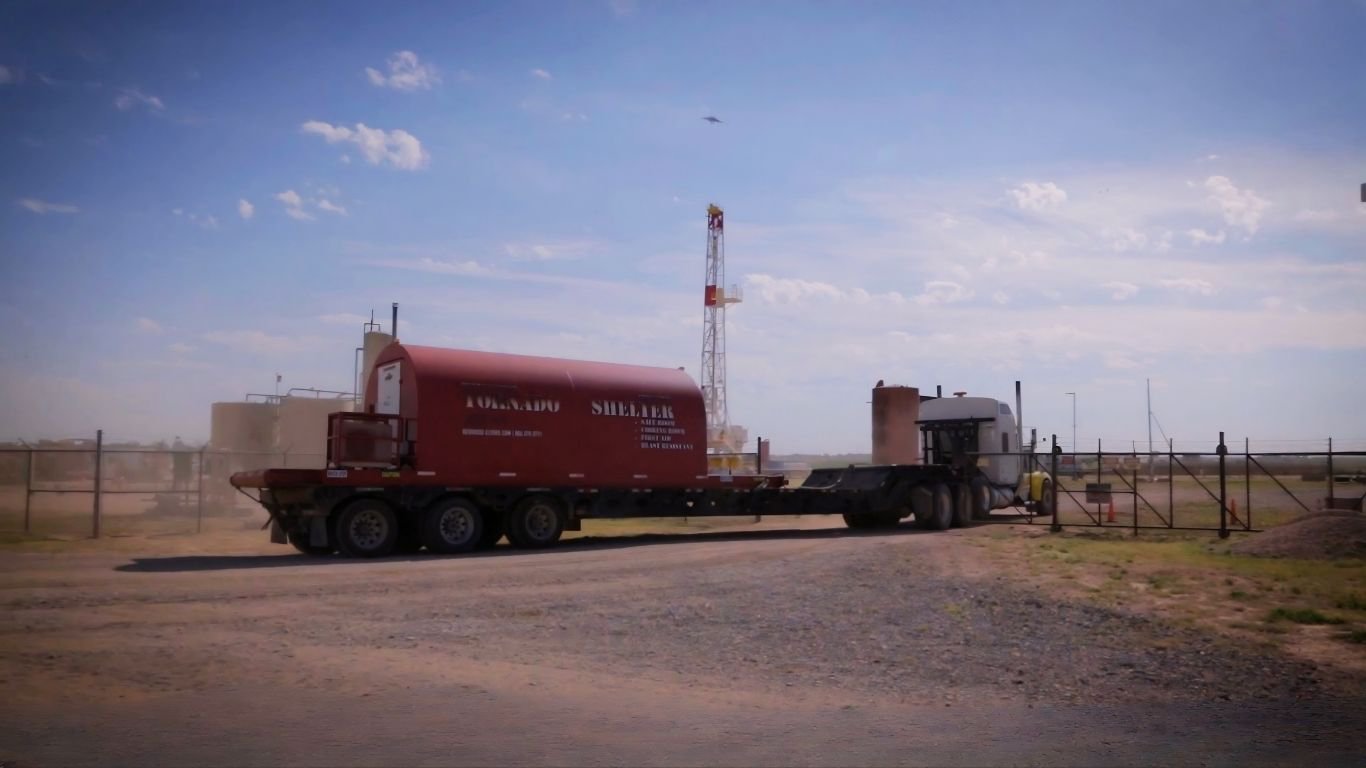
A mobile shelter fits into data center construction planning the same way temporary power or portable cooling does. A shelter fleet moves, scales, and repositions as the project evolves.
Red Dog's Big Dog units measure 35 feet by 8.25 feet and hold 32 people per FEMA standards. No foundation and no mechanical anchoring means teams place units anywhere on the site. Furthermore, there is no ground disturbance and no permitting delay. That matters on a data center build where site access and compaction schedules are tightly managed.
In addition, units scale with the project. Early civil works may require two shelters near excavation zones. As structural steel rises and MEP crews arrive, teams add units and shift positions to cover new work areas. When commissioning begins and headcount drops, the fleet scales back. That flexibility is exactly what resilient data center infrastructure planning requires. You can review how the Uptime Institute frames data center resilience across all four Tier classifications.
FEMA-Rated Protection Without Permanent Infrastructure
One of the core challenges on a data center construction site is that the site keeps changing. Underground storm shelters or fixed safe rooms are not practical options. In contrast, a winch truck drops above-ground mobile shelters in hours, repositions them as zones shift, and hauls them off at project close. No remediation needed.
Red Dog shelters meet and exceed FEMA P-361 certification. Red Dog engineers stamp and certify each unit individually. Therefore, safety directors can document compliance for insurance carriers and owner representatives without waiting for permanent infrastructure to go up.
The units also function beyond their primary role as storm shelters. On a data center build, they serve as cooling stations in summer heat and warming rooms during winter commissioning. They also work as muster points for general emergencies. Moreover, each unit acts as a Faraday cage when grounded, adding lightning protection during electrical work phases.
Positioning Shelters Across a Large Data Center Footprint
A hyperscale campus may cover 50 or more acres. By that point, a single centralized shelter cannot cover the full site within the time a tornado warning allows. That is why distributed deployment is the right model.
Red Dog sizes its shelters for distribution across large sites so crews reach cover faster when storms develop quickly. Customers can reposition units themselves. If they need help, Red Dog dispatches a winch truck as construction zones shift. Because crews skip mechanical anchoring entirely, repositioning takes minutes. Still, each unit is secure as soon as it touches flat ground.
Why Crew Safety Belongs in Data Center Infrastructure Management From Day One
The strongest DCIM plans treat crew safety as a first-order input. Not a reactive measure. That means mapping shelter zones during site layout, timing delivery to crew mobilization, and shifting units as the build moves through phases.
By contrast, waiting until a weather event exposes crews and creates liability for project owners and general contractors. For EHS directors and project managers, mobile shelter deployment pays off in every season, every shift, and every phase of construction. Even so, Red Dog runs yards in Texas and Oklahoma for fast delivery to active construction sites across the region.
Every Red Dog unit on a data center site is FEMA-rated, individually certified, and ready in as little as five minutes. If your construction safety plan doesn't yet cover the build phase, contact us for a quote.