
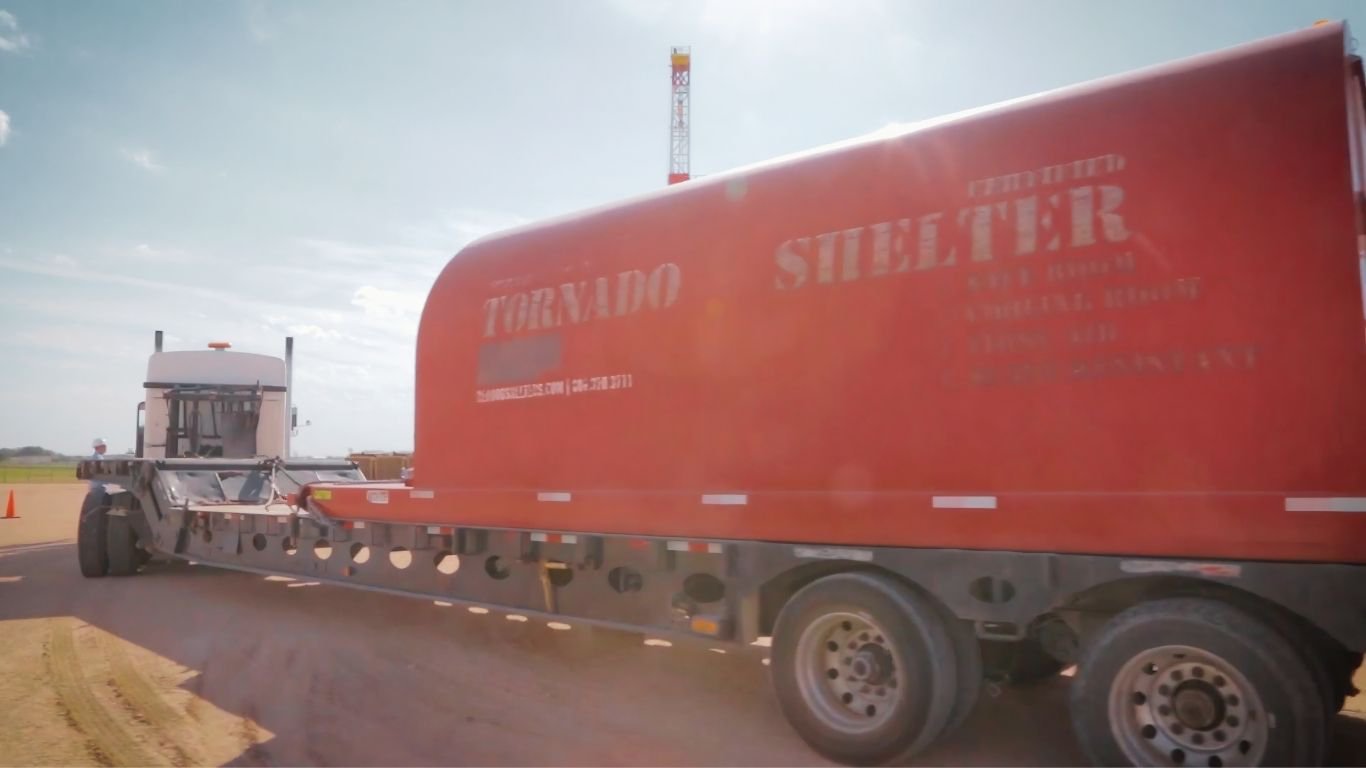
A drilling crew in the Permian Basin finishes its morning shift and heads to the job trailer for a break. A tornado warning fires at 11:42 AM. The nearest town is 30 miles away. The trailer has no FEMA certification and no rated capacity. As a result, there is no way to protect 20 people from an EF-5 wind load. That is not an edge case. For off-grid workforces, remote job site shelters are not optional equipment. They are the difference between documented protection and a preventable tragedy.
Yet off-grid sites often go without certified shelter coverage because of two assumptions. First, that shelter deployment requires foundation work or mechanical anchoring that takes days to complete. Second, that a single centralized unit covers a large site. Neither assumption holds.
What Makes a Remote Job Site Shelter Different
Remote job site shelters face conditions that fixed or permanent safe rooms do not. Terrain is uneven. Access roads are unpaved. Work zones shift as a project progresses. In contrast to a facility with permanent infrastructure, a remote site may relocate its active footprint multiple times over the course of a project.
For that reason, the shelter solution has to move with the job. A unit that requires a foundation or mechanical anchoring cannot do that. Instead, it locks into one position and becomes a fixed liability the moment the work zone shifts away from it.
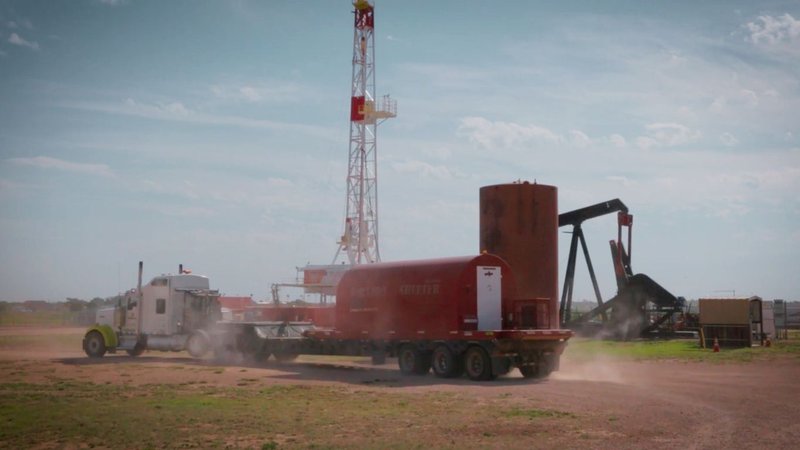
Red Dog Big Dog units solve this directly. Also, each unit uses the patented Aerodynamic Anchoring system, which requires no foundation and no mechanical anchoring. The curved roof creates a low-pressure zone at the base under high wind loads. Two vacuum tubes transfer that pressure downward, locking the unit to the ground without bolts or stakes. The harder the wind, the tighter the hold.
Because crews skip anchoring setup entirely, a trained Red Dog team drops a unit onto flat ground and it is ready. That takes as little as five minutes. Moreover, customers can reposition units themselves as the project evolves, or call Red Dog to dispatch a winch truck.
OSHA, the General Duty Clause, and Remote Site Exposure
Under the General Duty Clause, employers must provide a workplace free from recognized hazards likely to cause death or serious physical harm. Severe weather is a recognized hazard. In short, for remote sites operating in tornado-prone regions, that obligation does not shrink because the site is temporary or off-grid.
In practice, that means safety directors and project managers at remote sites carry the same compliance exposure as permanent facilities. However, remote sites face one additional challenge. There is no existing infrastructure to fall back on. A permanent facility may have a concrete safe room or reinforced interior space. A drilling pad, pipeline right-of-way, or remote construction site has neither.
Therefore, the only compliant path is a deployable, certified unit that travels with the crew.
Sizing the Right Fleet for a Remote Footprint
One of the most common planning errors on remote job sites is assuming one shelter covers the full crew. In practice, a 60-person crew spread across a large drilling pad cannot all reach a single centralized unit in time. That is why two to three minutes is the practical response window on an active outdoor site.
Red Dog Big Dog units hold 32 people per FEMA standards and measure 35 feet by 8.25 feet. For a 60-person crew, that means a minimum of two units. For example, sites with spread-out work zones benefit from three or four units at key points across the footprint. That gives every crew member a realistic path to cover.
Similarly, units scale with the project. Clients add shelters as headcount grows during peak phases and reduce the fleet as work winds down. That means the protection level stays matched to actual crew exposure at every stage.
Multi-Purpose Value on Remote Sites
Remote job site shelters earn their deployment cost across multiple functions. In summer heat, Red Dog units serve as cool-down stations where supervisors rotate crews through rest cycles. In winter, they function as warming rooms. They also serve as muster points for general site emergencies and as Faraday cages during lightning events when grounded.
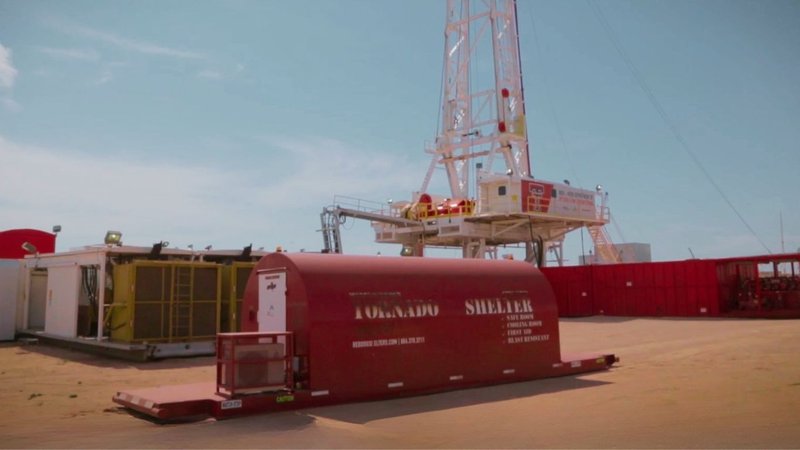
By contrast, standard job trailers serve none of these functions. A single Red Dog unit covers more operational ground than any comparable fixed asset. It runs air conditioning in July and provides certified storm protection when a warning fires. For remote oil and gas sites where the nearest emergency response resource is 30 or more miles away, that multi-purpose function is a core component of the site safety plan.
Deploying Remote Job Site Shelters: Delivery, Positioning, and Repositioning
Red Dog delivers units via semi and flatbed winch truck, with trained drivers who load and unload using the winch. Receiving crews need no additional equipment. In addition, units reach active sites within 24 to 48 hours from yard locations in Moore, OK, Minden, LA, and Lubbock, TX.
Still, delivery is only the start. As a remote project evolves, work zones shift. Red Dog units move with them. Even so, customers who have the means reposition units themselves. For customers who need support, Red Dog dispatches a winch truck as project phases change. Furthermore, because there is no mechanical anchoring to remove, repositioning requires no remediation or downtime.
Ultimately, the right remote job site shelter is not the closest available unit. It is a certified, mobile, multi-purpose asset sized to the crew, positioned across the site footprint, and ready to move as the project does.
Red Dog units meet all four criteria. If your remote site has yet to receive certified coverage in place, get in touch with us to learn more and get started.