

A certified shelter only protects your crew when every component works the moment a warning sounds. Following a storm shelter inspection checklist keeps doors, alerts, and life-support systems ready between storms. Without routine checks, small problems such as a stuck latch or dead battery can become serious failures.
Safety directors also need documentation that proves shelters remain ready for auditors, insurers, and regulators. Periodic inspections create that paper trail while catching issues long before storm season peaks. Use the guidance below to build a practical routine for every shelter on your site.
Why a Storm Shelter Inspection Checklist Protects Compliance
Compliance depends on proof, and a written routine gives you that proof for every unit. According to the Occupational Safety and Health Administration (OSHA), an emergency action plan covers evacuation procedures and employee accountability. Your shelter is part of that plan, so its readiness deserves the same scheduled attention.
A storm shelter inspection checklist turns readiness into a repeatable process anyone on your team can follow. Each inspection records the date, inspector, findings, and corrective actions for every unit. Consequently, you can show auditors exactly when each shelter was verified and who signed off.
Missed inspections often surface only after a storm, when the cost of failure is highest. In contrast, scheduled checks reveal wear early, keep repairs simple, and protect your crew.
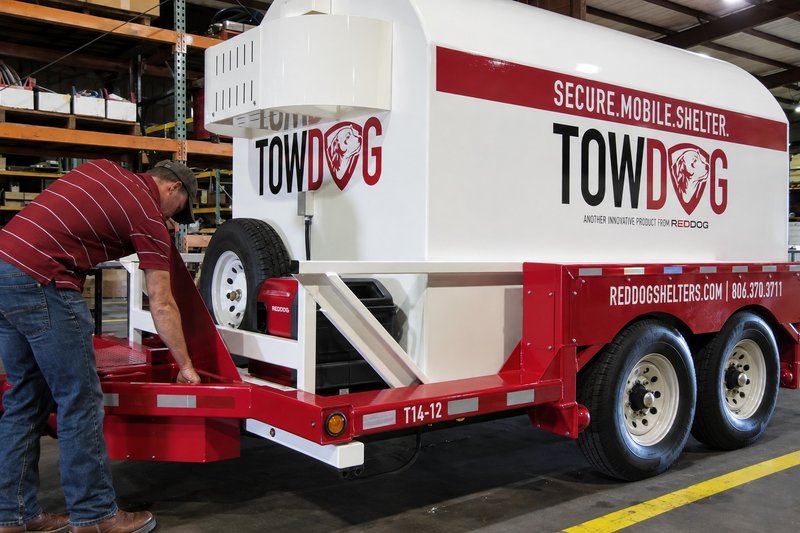
Above-ground units simplify the process because inspectors never enter a damp, below-grade chamber. Red Dog shelters also reduce workload, since aerodynamic anchoring removes bolts and anchors from your list. Learn why a maintenance-free storm shelter above ground saves time across every inspection cycle.
What Belongs on a Storm Shelter Inspection Checklist?
A storm shelter inspection checklist should cover the door, hardware, shell, ventilation, alerts, lighting, and climate systems. It should also confirm posted capacity, clear access routes, level placement, and stocked emergency supplies. Finally, every inspection needs a signed record with findings, corrective actions, and the next scheduled date.
Build Your Periodic Inspection Schedule
Frequency matters as much as content, so match each task to how quickly components wear. Sites in active storm regions should increase checks as the season approaches and after every event. The following schedule gives your storm shelter inspection checklist a practical and repeatable rhythm.
- Weekly: Walk each access route, test door operation, and confirm nothing blocks the entrance.
- Monthly: Test the siren, strobe lights, emergency lighting, and backup power under realistic load.
- Quarterly: Inspect seals, hinges, latches, vent covers, and the roof area around the vacuum tubes.
- Post-storm: Check for debris impact, confirm level placement, and verify every system before reoccupying the site.

Additionally, assign one owner for each unit so no inspection falls between shifts or contractors. Digital forms with photos make records easier to share with auditors and leadership. Over time, those records also reveal patterns that guide placement and maintenance decisions.
Placement checks matter because units should always rest on flat, stable ground at all times. If grading changes the surface, Red Dog can send a winch truck to reposition the shelter.
Inspect the Systems That Support Occupants
Structural protection holds without power, but occupants still rely on electricity for alerts, light, and cooling. Red Dog units include a 128-decibel siren, strobe lights, dual air conditioners, and heaters. Therefore, test each system under load rather than simply confirming that switches turn on.
Generators deserve special attention, because stale fuel and weak batteries cause many cold-start failures. Review our guide to backup emergency power for storm shelters for testing intervals and fuel planning.
Ventilation also needs regular checks, since 32 occupants generate heat and moisture quickly inside a sealed space. Clear vents of nests, dust, and debris, and confirm fans operate at full capacity. Meanwhile, verify that posted capacity signs reflect the Federal Emergency Management Agency (FEMA) standard of 5 square feet per occupant.
Your storm shelter inspection checklist should also cover the extra roles each unit plays on site. For example, units serving as cooling rooms, muster points, or Faraday cages during lightning see heavier daily use. Understanding the testing process for tornado-safe certified shelters helps you know which components matter most.
Keep Your Storm Shelter Inspection Checklist Audit-Ready
Routine inspections protect your crew, your schedule, and your compliance record at the same time. Therefore, document every check, assign clear ownership, and increase frequency as storm season approaches. Red Dog shelters simplify the routine with passive anchoring, fewer moving parts, and no below-grade spaces.
Our team supports leased units with guidance on inspections, relocation, and scaling as your project changes. Lease terms vary with project length, so we tailor options to your timeline and crew size. Call our team today to pair your inspection program with shelters built for fast-changing job sites.
Leave a Reply