

Industrial projects demand shelters that protect large crews, survive extreme winds, and keep pace with changing sites. When you compare storm shelter companies, glossy brochures often hide real differences in engineering and service. Knowing what to examine helps you protect workers and avoid costly surprises after you sign a contract.
Safety directors and project managers face pressure to choose quickly as storm season approaches each year. However, a rushed decision can leave your crew with inflated capacity ratings or slow installation timelines. Use the differentiators below to separate certified partners from vendors who simply sell steel boxes.
Verify Standards Before You Compare Storm Shelter Companies
Certification should be the first filter, because every other feature means little without verified protection. Ask whether units meet Federal Emergency Management Agency (FEMA) P-361 and International Code Council (ICC) 500 requirements. Additionally, confirm third-party verification through the National Storm Shelter Association (NSSA) or an independent testing lab.
Reputable storm shelter companies share test results, stamped documentation, and design criteria without hesitation. In contrast, vague answers about wind ratings or debris testing signal real risk for your crew.
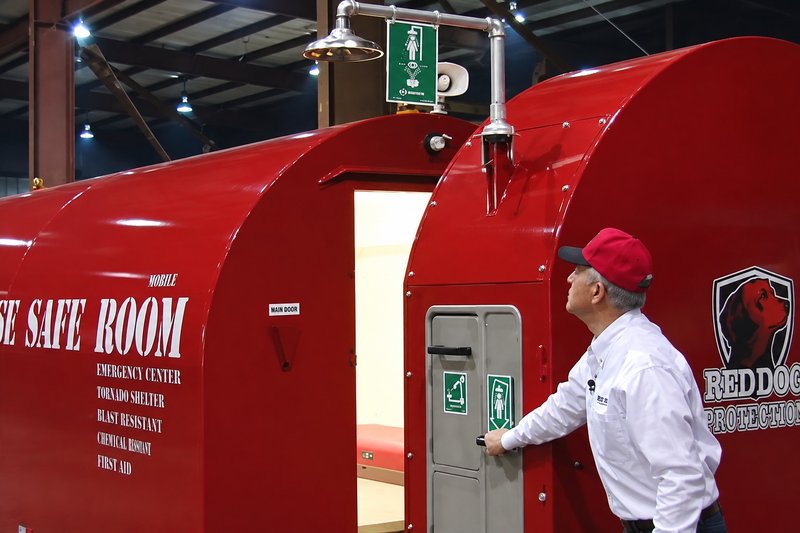
Red Dog units resist 250-mph winds and withstand debris impacts that meet FEMA tornado test criteria. The 100% A36 steel shell and 300-pound door add another layer of verified strength. See how FEMA-rated shelters compare with standard units before you shortlist any supplier.
Beyond certification, the strongest partners help you plan placement, scaling, and relocation over time. They understand how jobsites evolve, and they design service models around your project schedule. Therefore, evaluate the company behind the shelter as carefully as you evaluate the shelter itself.
What Differentiators Matter Most When Comparing Storm Shelter Companies?
The most important differentiators among storm shelter companies are certification, honest capacity ratings, and installation requirements. Leading suppliers also offer mobility, scalable fleets, and multi-purpose features that add value between storms. Finally, look for fast lead times and responsive service that keeps your protection aligned with project changes.
Scrutinize Capacity Ratings and Occupancy Math
Capacity claims vary among storm shelter companies more than almost any other specification. Some vendors advertise higher occupancy by applying the residential standard of 3 square feet per person. Consequently, two units of similar size can appear to protect very different numbers of workers.
FEMA sets 5 square feet per occupant for commercial storm shelters, which applies to industrial jobsites. Ask each supplier the following questions before you trust any capacity figure on a spec sheet.
- Square footage: What is the usable interior floor area of the occupied cabin?
- Divisor: Did the company divide by 5 square feet for commercial use or 3 for residential?
- Documentation: Can the supplier show the standard and calculation behind its published rating?
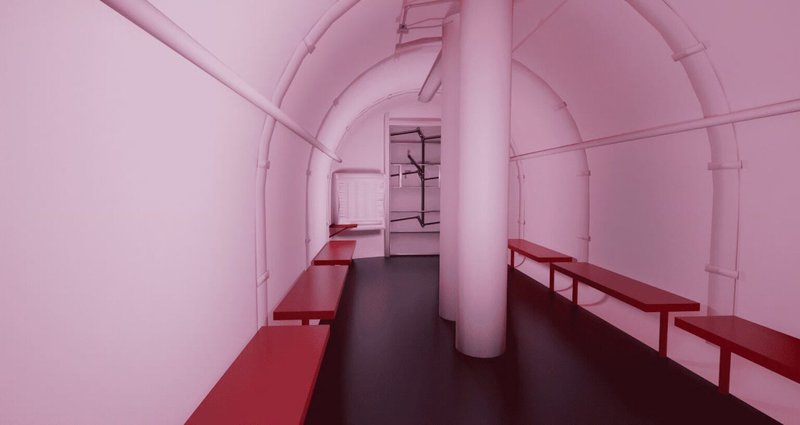
Red Dog divides its 160-square-foot cabin by 5 and rates each unit for 32 occupants. As a result, you plan crew coverage using a transparent number that aligns with FEMA guidance. Read our guide on how to vet a storm shelter manufacturer before large commercial contracts.
Compare Anchoring, Mobility, and Service Models
Installation requirements reveal hidden costs that rarely appear on the first quote from a supplier. Many fixed shelters need concrete pads, mechanical anchors, and inspections before anyone can use them. Learn more about the hidden cost of storm shelter anchoring before you compare total investment.
Red Dog uses patented aerodynamic anchoring, so units sit on flat ground and secure themselves immediately. Two vacuum tubes in the curved roof create a pressure differential that builds downward force as wind rises. Because the system is passive, it needs no foundation, bolts, or power to hold the shelter down.
Mobility also matters among storm shelter companies, because your shelter plan should change as the jobsite changes. You can move units with your own equipment, or Red Dog sends a winch truck to reposition them. Additionally, you add units as headcount grows and release them as the project winds down.
Look for suppliers with nearby yards and fast lead times when storms threaten your region. Red Dog deploys from yards in Oklahoma, Louisiana, and Texas, often within 24 to 48 hours.
Choose Among Storm Shelter Companies With Confidence
The right partner delivers verified protection, transparent capacity, and flexibility that matches your project. Therefore, compare certification, occupancy math, anchoring, and service models side by side before you commit. A careful review today prevents gaps in protection when the next storm reaches your site.
Red Dog Shelters combines FEMA-aligned ratings with patented aerodynamic anchoring and rapid deployment across job sites. Lease pricing depends on how long you keep each unit, so a direct conversation brings clarity. Get in touch with our team to compare your options and start your lease with confidence.